
The Gym Is the Foundation: Build Strength To Use Everywhere
We tend to put different types of exercise into separate boxes.
You go to the gym. Or you play tennis. Or you cycle. Or you run. Or you walk. Or you play football.
And if you’re already doing one of those things regularly, it can be easy to look at strength training as something extra. Another activity to somehow fit into the week. Something that’s probably good for you, but perhaps not particularly relevant if what you actually enjoy is being outside, playing sport or doing something completely different.
I think that’s looking at it the wrong way around.
For most people, the gym doesn’t need to be the thing you love doing. Strength training can simply be the foundation that makes you better able to do the things you do love doing.
There are very few sports, hobbies or physical activities that aren’t made easier by being stronger.

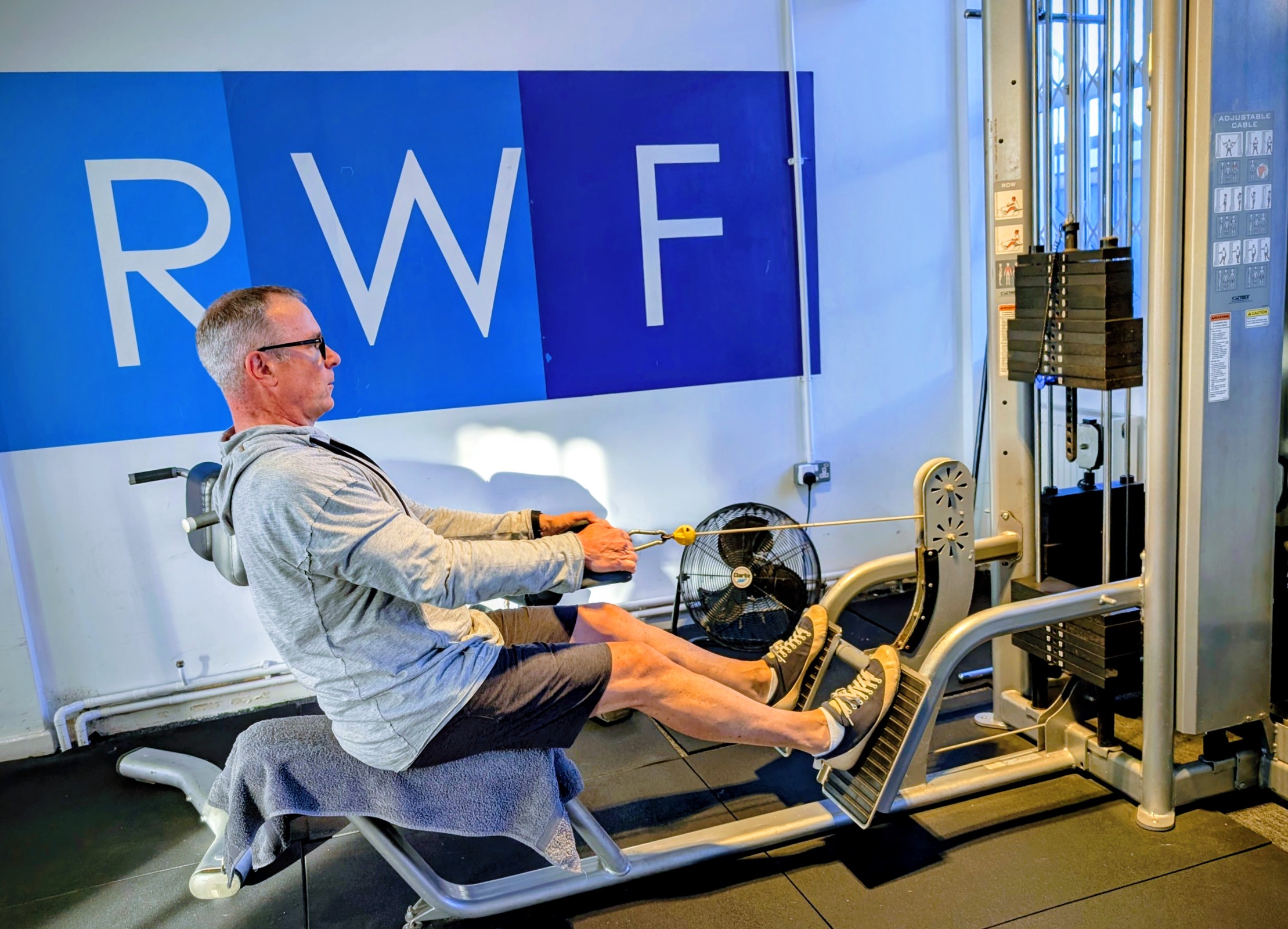
Annette doesn’t “love” the gym – but it keeps her on her real passion, the water.
The Gym Doesn’t Have to Be Your Hobby
This is something I talk about with clients quite a lot.
I’m obviously a personal trainer and I’ve spent a large part of my life in gyms. But I don’t expect everyone who walks through our doors to suddenly develop a passion for lifting weights. Plenty of our clients don’t.
They come in, do their strength training and then go back into normal life and everyday activities.
That might be onto a tennis court. It might be onto a bike, or walking in the Peak District, or football, cricket, ski-ing, paddleboarding or simply being able to do more physically without worrying whether their body is going to cope with it.
The gym is the work that supports the fun stuff, and once you start looking at strength training like that, its place in your week becomes much easier to justify.
Build a Bigger Physical Engine
A client said something to me recently after going out for a 30-mile bike ride.
He hadn’t done a ride like that for months, if not years, so there was every reason to expect it to be pretty hard work. Fitness-wise, there was obviously still a challenge involved. But what surprised him was just how easy the muscular side of cycling felt.
The hills weren’t destroying his legs, and producing force through the pedals felt easy. His legs simply weren’t the limiting factor he’d expected them to be.
He hadn’t been training specifically for cycling. We’d just been focussing on getting stronger all over. That’s an important distinction. Strength training hadn’t somehow given him cycling fitness without cycling. What it had done was increase the amount of physical capacity he had available when he got back on the bike.
Something that previously represented a relatively large demand on his legs now represented a smaller one.
Chris enjoys the gym now, but never realised how much gym-work would translate into hobbies outside of it
Strength Doesn’t Replace Skill
I’ve seen the same thing with another client who plays tennis.
After having a lesson with a coach she hadn’t seen for roughly a year, one of the first things the coach noticed was how much harder she was hitting the ball. Her tennis technique hadn’t been completely rebuilt. She hadn’t spent the year having intensive coaching, in fact, she’d probably played less that year than normal.
But she’d become considerably stronger.
That’s not to suggest that lifting weights teaches you how to play tennis. It obviously doesn’t. If you want to improve your serve, your forehand or your positioning, you need to practise tennis, and you need to improve your skillset.
But strength gives you more physical capacity to apply to those skills.
If your technique allows you to transfer force effectively into the ball and you’ve increased the amount of force your body can produce, it’s hardly surprising when the ball starts travelling a little faster without compromising your technique.
Skill and strength aren’t competing qualities. One gives you the ability to perform the movement, and the other gives you more physical resources with which to perform it.
I’ve Seen the Same Thing at World-Class Level
Years ago, I trained a professional household-name cricketer who was genuinely operating at world-class level.
After a period away from cricket during Covid, and a block of strength training, they went back into the nets with their professional club. The feedback from the head coach was immediate. They were bowling harder and hitting the ball harder than they had the previous season.
Again, the strength work hadn’t taught them how to bowl or bat. We’re talking about an athlete who already possessed an extraordinary level of sporting skill. What had changed was the physical platform underneath that skill.
That’s why strength and conditioning exists in professional sport in the first place.
Professional footballers don’t only play football. Tennis players don’t only play tennis. Cricketers don’t only play cricket. They practise their sport, but they also spend time developing the body that has to perform it.
The same principle applies to the rest of us, even if our Saturday afternoon tennis match is operating at a rather different level.
Sometimes the Difference Is Much More Important Than Sport
One of my clients, Lisa, loves walking.
The Lake District is her happy place. She doesn’t train because she has any great interest in gyms or because she particularly cares how much weight she can lift. She just wants to walk.
She had reached a point where doing the thing she loved was becoming increasingly difficult. Her physical capacity wasn’t matching what she wanted to ask her body to do. So we worked on getting her stronger, and the difference that has made goes far beyond gym strength.
Lisa is now going away on three and four day walking holidays on her own. She doesn’t feel that she needs somebody with her simply because she’s worried about whether she’ll physically cope. She knows she can, because she’s stronger, she’s more capable and she’s got confidence in what her body can do.
Lisa still isn’t particularly interested in becoming a ‘gym person’, but she won’t give up the gym because she knows what it gives her outside it.
For me, that’s one of the best explanations of why strength training matters, and I explain it to new clients every month.

Lisa’s work in the gym has made her passion outside of it possible
Think of Strength as the Bedrock
There’s a useful way to think about the hierarchy of exercise.
At the bottom you’ve got your basic physical capacity. Strength. Muscle. The ability to produce force, control it and tolerate the physical demands you’re going to place on your body.
On top of that you can build more specific qualities.
Endurance. Speed. Power. Balance. Coordination. Sporting technique.
And then, ultimately, you get to the things you actually want to do.
Playing tennis. Cycling. Walking in the mountains. Skiing. Playing five-a-side. Paddleboarding. Running around with your children or grandchildren. Going on an active holiday without spending the weeks beforehand wondering whether you’re fit enough for it.
Strength isn’t everything you need to do those things, but it’s a very useful foundation to build them on.
This Matters More as We Get Older
When you’re 20, you can get away with quite a lot.
You can decide to play football after doing virtually nothing for six months. You can suddenly start playing tennis three times a week. You can jump on a bike and ride much further than usual and assume your body will probably figure it out.
As the years go by, maintaining the physical qualities underneath those activities becomes more important.
That doesn’t mean accepting that everything inevitably becomes harder once you hit 40, 50 or 60. Quite the opposite, it means doing something about it.
If you want to continue playing tennis into your 60s, train the body that has to carry you around the court. If you want to spend your retirement walking in the Lakes, make sure your legs are strong enough to keep taking you up and down the hills.
If you want to keep cycling, skiing, golfing, paddleboarding or playing football, don’t just practise the activity itself. Maintain the physical base layer underneath it.
Strength training becomes less about what you can do in the gym and more about keeping your options open outside it.
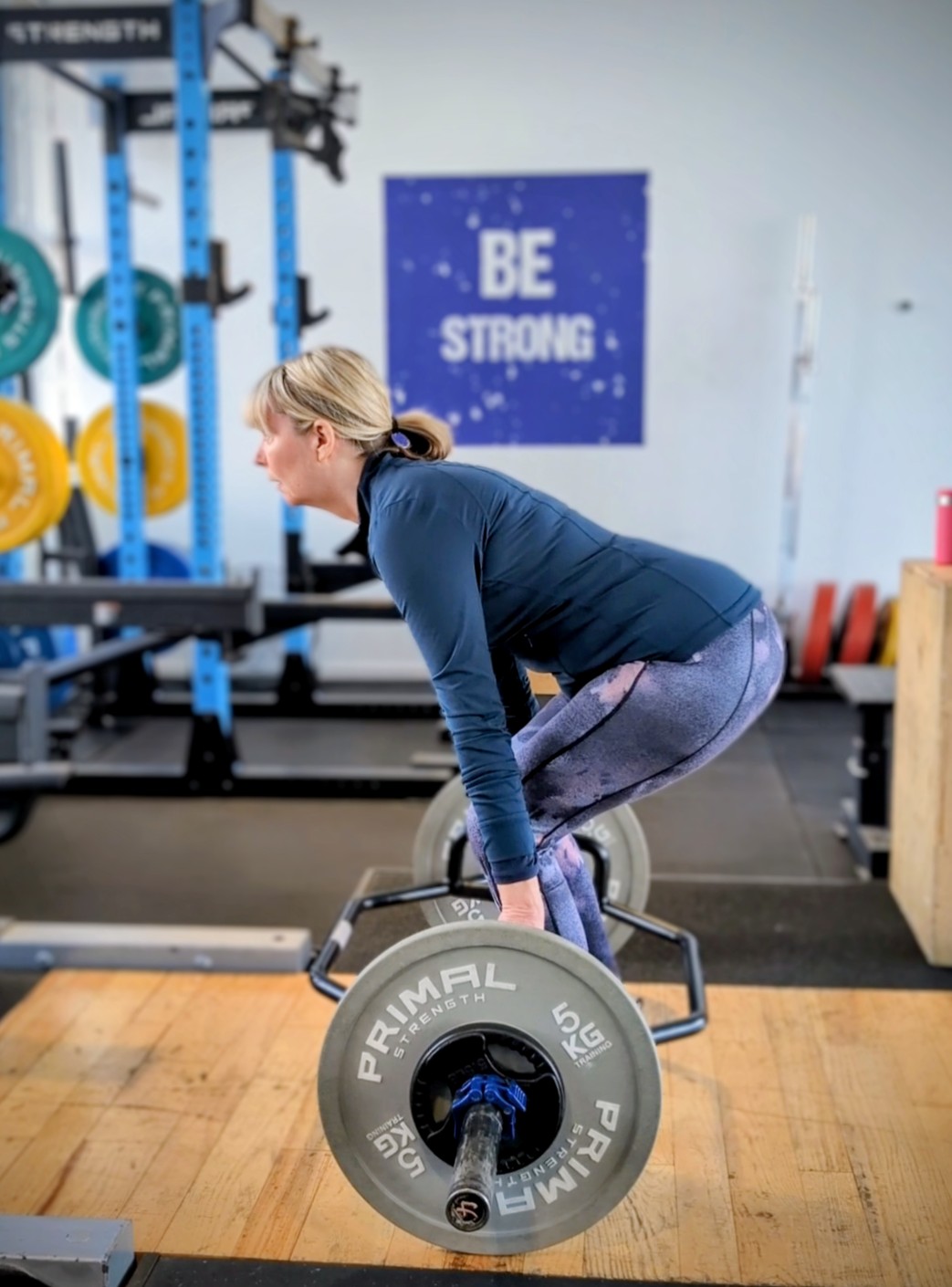
Brom is now the one climbing the steps on holiday and exploring, rather than sitting out activities on holiday.
What About Injuries?
It’s tempting to say that strength training prevents injuries, but that’s far too simplistic.
People who are strong still get injured. A better way of looking at it is in terms of capacity.
Every physical activity places demands on your body. Tennis asks something of your legs, shoulders and trunk. Running places repeated demands through your lower body. Walking down a mountain requires your legs to repeatedly control your bodyweight as you descend.
Strength training can increase your capacity to deal with those demands.
If an activity is asking for something relatively close to the maximum you’re capable of, there’s not much room to spare.
Increase your physical capacity and exactly the same activity can represent a much smaller challenge. That doesn’t make you indestructible, but it does give you more to work with.
You Don’t Have to Love the Gym
There’s a strange assumption within the fitness industry that we’re supposed to convince everyone to fall in love with training.
I don’t think that’s necessary.
Some people genuinely love lifting weights. Some enjoy coming to the gym but wouldn’t call it a hobby. Others see it almost entirely as something they do because of what it allows them to do elsewhere.
All of those are perfectly good reasons to train. You don’t need to care about your squat PB. You don’t need to build your life around the gym. You don’t even have to particularly look forward to every session.
But if an hour or two of strength training each week means you’re still playing padel, tennis, climbing hills, riding your bike, skiing, playing football or heading off on walking holidays years from now, that’s a pretty good return on the time you’ve invested.
The gym doesn’t have to be your sport. Build the foundation in the gym. Then go and use it.
If you’re based in Nottingham and would like to learn how strength training could help you feel stronger, healthier and more confident, book a free personal training session. We’ll discuss your goals, answer your questions and show you how the right programme can help you get more out of life, both now and in the years ahead.
If you’d like to see what we’re about, get in touch or arrange a free 7-day trial.
Book your free Personal Training session today
If you’re in Nottingham and thinking about working with a personal trainer, this is the perfect opportunity to see what professional coaching can do.
Book your FREE personal training session and discover how expert guidance, a structured plan and genuine accountability can help you build strength, improve your fitness and achieve lasting results.
There’s no pressure and no hard sell. Just the opportunity to experience personal training for yourself, ask questions and see how we work.
After one session, you’ll know whether we’re the right gym, the right coach and the right approach for you.
Sign up to the RWF newsletter

