
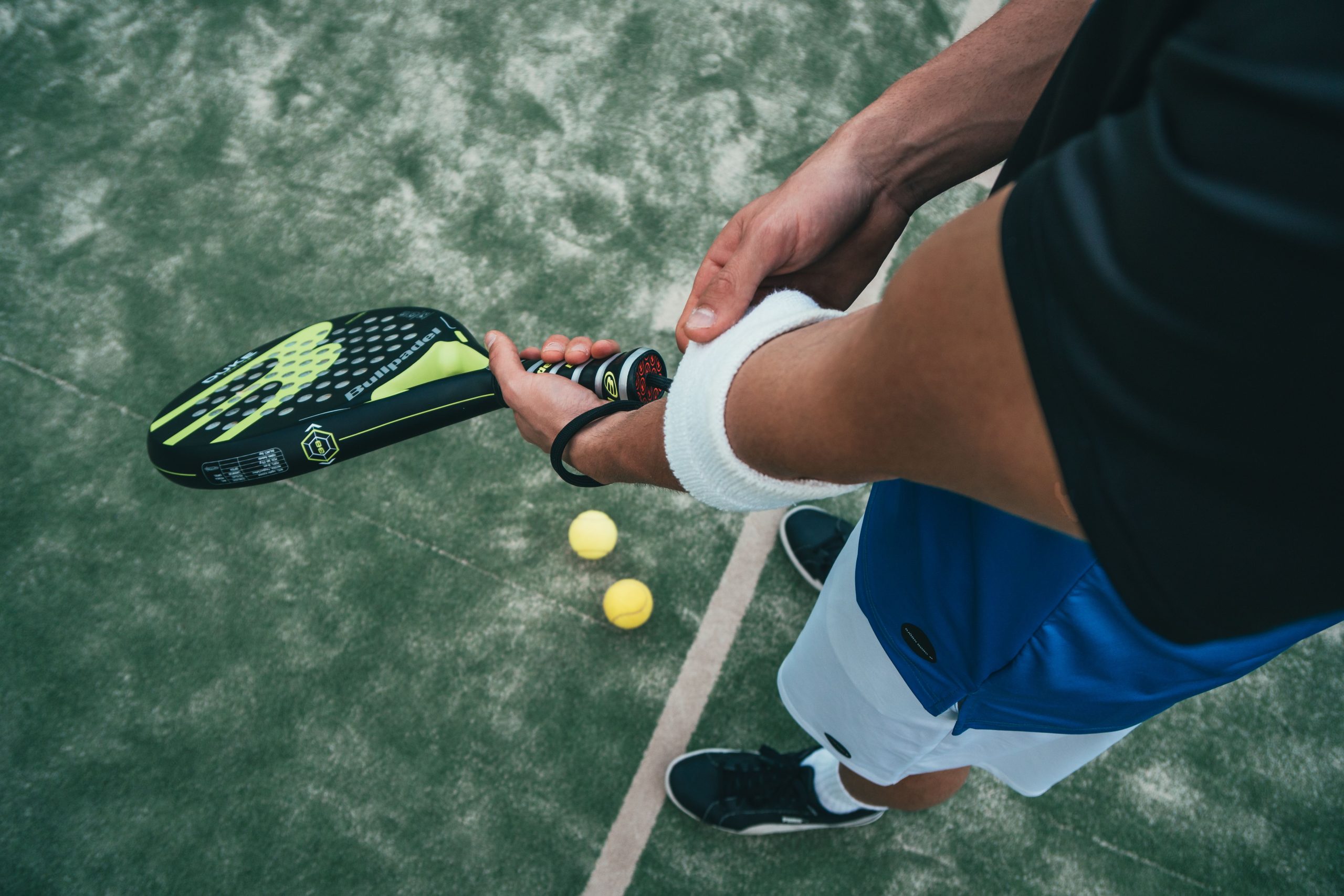
Padel and Tennis Elbow: How to Prevent It, Manage It and Keep Playing
Padel has become one of the fastest-growing sports in the UK, and much of its appeal comes from how accessible it feels. You can pick up a racket, understand the basics reasonably quickly and enjoy a competitive game without spending years learning perfect technique. Sometimes, it’s actually better if you haven’t played a previous racket sport to any decent degree.
That accessibility can also be slightly misleading.
Thousands more people are suddenly taking up a new racket sport – it’s inevitable many will pick up injuries
Many people taking up padel in their 30s, 40s and 50s have never played a racket sport before. They may already be reasonably fit, train in a gym or play other sports, but their hands, wrists, forearms and elbows are not accustomed to repeatedly gripping a racket and absorbing the force of hundreds of ball contacts, in a sport where some of that force isn’t absorbed by strings in the racket.
The result is an increasingly familiar complaint: pain around the outside of the elbow, often referred to as tennis elbow or, increasingly, padel elbow.
The answer does not necessarily have to be giving up padel until the pain disappears. In many cases, the better approach is to understand why the elbow has become irritated, temporarily manage the amount of stress being placed on it and gradually build the strength and capacity needed to tolerate the sport.
What Is Tennis Elbow?
Tennis elbow is the common name for lateral elbow tendinopathy. It usually produces pain around the bony area on the outside of the elbow, where several of the muscles that extend the wrist and fingers attach.
Despite the name, you do not have to play tennis to develop it. It is associated with activities involving repeated gripping, wrist movement and loading of the forearm muscles. That can include manual work, gardening, weight training and, increasingly, padel.
The pain may initially appear only while playing. You might notice it when hitting a backhand, stretching for a low ball or gripping the racket tightly during a fast exchange at the net. As it becomes more irritated, everyday tasks such as lifting a kettle, carrying a shopping bag, opening a door or shaking someone’s hand can become uncomfortable.
Although people often describe the problem as inflammation, persistent tennis elbow is usually better understood as a tendon that has become sensitive and unable to cope comfortably with the demands being placed upon it.
That distinction is important. If the problem were simply inflammation, a few days of rest might solve it. Tendons usually require a more gradual process of load management and strengthening.

Tennis elbow is a persistent, annoying and often severely painful condition
Why Does Padel Cause Tennis Elbow?
Padel is not inherently bad for your elbows. The problem is usually the relationship between the amount of work being demanded from the arm and the amount of work the arm is currently prepared to tolerate.
This is particularly relevant for adults who take up their first racket sport later in life.
You may have spent years developing strong legs in the gym, running regularly or playing football, but that does not automatically mean the tendons around your wrist and elbow are prepared for several hours of padel each week.
Padel also creates a particular combination of stresses. The court is small, rallies can be quick and players frequently make reactive shots from imperfect positions. Beginners often hit the ball late, grip the racket too tightly and attempt to generate power almost entirely through the wrist and arm.
The elbow ends up doing work that should be shared between the legs, hips, core, shoulder and racket.
The most common contributing factors include:
Doing Too Much, Too Soon
Padel is sociable, enjoyable and easy to play frequently. Someone may go from no racket sport at all to playing three or four times a week within a month.
Your enthusiasm and cardiovascular fitness may allow you to complete those sessions, but tendons adapt more slowly. A sudden increase in playing frequency, match length or intensity is one of the clearest reasons discomfort begins.
The problem may not be one particular shot. It may simply be that your arm has not yet caught up with your new obsession.
Gripping the Racket Too Tightly
New players commonly hold the racket as though somebody is trying to steal it.
A firmer grip may feel more secure, but continuously squeezing the handle makes the forearm muscles work much harder. That tension then continues through the wrist and into the tendons at the elbow.
You obviously need enough grip to control the racket. The aim is not to hold it loosely during contact, but to avoid maintaining maximum tension throughout the entire point.
Learning to relax the hand between shots can make a significant difference.
Using the Arm Instead of the Whole Body
Good racket technique distributes force through the entire body. The legs establish position, the hips and trunk contribute rotation, the shoulder guides the movement and the forearm transfers that force into the racket.
Less experienced players often arrive late to the ball and compensate by flicking the wrist or pulling aggressively with the forearm.
This is especially common on the backhand. Repeatedly making contact with the wrist extended and the elbow relatively straight can place considerable demand on the outside of the elbow.
A few sessions with a good padel coach may therefore be part of the solution. Strengthening the arm is important, but it makes little sense to strengthen yourself solely so you can continue repeating an unnecessarily stressful movement.
Racket Choice
Racket weight, balance, stiffness and grip can all affect how demanding the racket feels.
There is no single perfect racket for everyone with elbow pain. A very heavy racket may place more demand on the arm, while a very light racket may feel unstable and encourage you to grip harder. A stiff, head-heavy, power-focused racket may also be less forgiving than a softer, more controllable model.
The sensible response is not necessarily buying the most expensive ‘elbow-friendly’ racket available. It is choosing a manageable racket that suits your experience, strength and technique. Beginners are often better served by a comfortable, controllable racket than an advanced model designed to maximise power.
Adding or replacing an overgrip can also help if the handle feels too small, slippery or uncomfortable. However, grip size alone is unlikely to explain every case of tennis elbow, and research from tennis has not found a straightforward relationship between modest variations in grip size and forearm muscle activity.
General Weakness and Lack of Preparation
Padel places repeated demands on the forearms, but the elbow does not operate in isolation.
If the shoulder, upper back and trunk fatigue quickly, the smaller muscles around the forearm may have to compensate. If you struggle to control your wrist under load, every rushed or off-centre contact becomes more demanding.
This is why the answer is rarely one magical forearm exercise. A useful programme should build the capacity of the hand, wrist, elbow, shoulder and upper back, while also helping you rotate and decelerate effectively through the trunk.
A proper training plan can keep you on the court far longer than ignoring the issue
How to Prevent Tennis Elbow When Starting Padel
Prevention does not require a complicated collection of rehabilitation exercises. The most useful steps are generally straightforward.
Begin with a realistic amount of padel. One or two sessions a week may be enough while your body adapts. If you are playing more frequently, avoid making every session a long, highly competitive match.
Your total workload is really important. Two padel matches, a heavy pulling workout, several sets of curls and a long gardening session may all place stress through the same tissues. The elbow does not separate these activities into different categories. It experiences the combined workload.
Build some specific forearm training into your normal gym programme. Wrist extension, wrist flexion, controlled rotation of the forearm and loaded carries can all improve the arm’s ability to grip and transfer force. These exercises should begin at a manageable level and progress gradually, just like training any other part of the body.
It is also worth developing your upper back, shoulders and trunk. Rows, pulldowns, controlled pressing movements and rotational exercises can help distribute work across more of the body.
Finally, invest some time in technique. Learning to position yourself earlier, use your body and make cleaner contact is likely to do more for your elbow than constantly searching for a new brace, massage tool or racket.
A Practical Padel Warm-Up for the Elbows and Shoulders
A warm-up does not need to exhaust you or take half an hour. Its purpose is to prepare the joints and muscles for the speed and forces that are coming.
Start with a few minutes of general movement. Walk briskly around the court, perform some gentle side steps and gradually introduce changes of direction. The elbow may be the area that hurts, but good footwork helps you reach the ball in a stronger position and reduces the need for desperate arm-dominated shots.
Next, move the shoulders, elbows and wrists through comfortable ranges. Shoulder circles, elbow bends, forearm rotations and wrist movements can all be performed gradually.
Then introduce a small amount of resistance. A light band can be used for rows, shoulder rotations and controlled wrist work. The intention is to wake the muscles up, not complete a full strength workout before the match.
Finish by rallying at low intensity. Begin with shorter swings and relaxed contact before increasing the pace. Avoid walking straight onto court and immediately smashing balls as hard as possible from the back of the court (yes, I know that’s way more fun!).
A simple sequence might look like this:
- Two to three minutes of walking, side steps and gradual changes of direction.
- Ten controlled shoulder circles in each direction.
- Ten elbow bends and forearm rotations.
- Ten gentle wrist extensions and flexions.
- One or two light sets of band rows or shoulder rotations.
- Several minutes of controlled rallying before full-speed play.
The exact exercises are less important than creating a gradual transition between sitting in the office all day and then playing a fast racket sport.
Can You Continue Playing Padel With Tennis Elbow?
In many cases, yes.
Completely resting until you feel nothing can work temporarily, but it does not necessarily increase the elbow’s ability to tolerate padel. When you return to exactly the same playing schedule, the pain may simply return.
The better question is not always, ‘does it hurt at all?’ It is, ‘how is the elbow responding to the amount I am doing?’
A small amount of manageable discomfort during activity does not automatically mean you are causing further damage. NHS exercise guidance for tennis elbow describes pain of up to around three out of ten as minimal and four to five as potentially acceptable, while higher levels are considered excessive.
That should not be treated as permission to ignore worsening symptoms. It is simply recognition that rehabilitation does not always have to be, and is actually rarely, completely pain-free.
A useful test is how the elbow behaves during the following 24 hours. If it settles back to its previous level, the activity may have been tolerable. If it becomes significantly more painful, affects normal daily tasks or remains aggravated for several days, you probably exceeded its current capacity.
Practical Ways to Keep Playing
The first adjustment is usually frequency. Playing twice a week instead of four times may allow the elbow to settle without removing the sport completely.
You can also shorten sessions or avoid booking long matches on consecutive days. The difference between a 60-minute game and two hours of continuous play can be substantial when the tendon is already sensitive.
Spend more time playing controlled points rather than repeatedly practising hard smashes. Overhead shots, late backhands and forceful wrist-dominated movements may be particularly provocative, although the exact triggers will vary between players.
A tennis-elbow strap may reduce symptoms for some people during aggravating activities. A temporary wrist support can also reduce demand on the wrist extensor muscles in certain cases. These devices should be viewed as tools that may help you manage activity, rather than cures.
It is also worth reviewing the rest of your week. You may be able to continue playing padel if you temporarily reduce heavy curls, gripping exercises or high-volume pulling work in the gym. That is different from abandoning strength training altogether.
The aim is to remove enough unnecessary stress to create room for the activities that matter most.
Strength Training for Padel-Related Tennis Elbow
Tendons generally become more capable when they are exposed to suitable, progressive resistance.
For an irritable elbow, this may begin with isometric wrist extension. Rest the forearm on a bench or table and hold the wrist against a light, unmoving resistance. This can be performed for several controlled holds without forcing the pain.
The next stage may involve slow wrist extensions using a very light dumbbell. Support the forearm, lift the wrist under control and lower it slowly. Both the lifting and lowering phases can eventually be trained, although eccentric, or lowering-focused, exercises are commonly included in tennis-elbow rehabilitation. Reviews suggest exercise can improve pain and function, although no single method is perfect for everyone.
Forearm rotation can be trained by holding a light hammer or dumbbell vertically and slowly turning the palm up and down. Grip work can be introduced using controlled carries or squeezes, provided it does not significantly aggravate symptoms.
The resistance may initially feel surprisingly light. That’s fine. The purpose is not to prove how strong you are during the first session. It is to find a level the elbow can tolerate consistently and gradually build from there.
A basic starting structure could include:
- Isometric wrist-extension holds.
- Slow wrist extensions with a light dumbbell.
- Controlled palm-up and palm-down forearm rotations.
- Light loaded carries.
- Rows and shoulder-strengthening exercises.
- Trunk rotation and anti-rotation exercises.
Two or three short sessions each week will often be more useful than one enormous rehabilitation workout performed whenever the elbow becomes particularly painful.
What About Massage, Ice and Anti-Inflammatories?
Ice may temporarily reduce discomfort after playing, particularly if the elbow feels hot or irritated. Some people prefer heat before activity. Neither is likely to rebuild the capacity of the tendon, but symptom relief can still be useful.
Massage around the forearm may also help the arm feel less tense. It should not involve repeatedly digging aggressively into the painful attachment at the elbow in the mistaken belief that more pain means more benefit.
Anti-inflammatory medication may be appropriate for some people, but it should be discussed with a pharmacist or doctor, particularly if you have other health conditions or take additional medication. The NHS advice is to seek medical or physiotherapy support when symptoms have not improved after around six weeks of self-management.
Passive treatments may help settle symptoms, but they should support a longer-term plan based around sensible loading, improved strength and appropriate technique.
Recovery Usually Requires Adjustment, Not Perfection
Tennis elbow can be frustrating because progress is rarely completely linear. You may have several good weeks, play a particularly demanding match and experience another flare-up.
That does not automatically mean you are back at the beginning.
Look at the overall trend. Are you able to play for longer? Is everyday gripping becoming easier? Does the discomfort settle more quickly after a match? Can you use more resistance during your strength exercises?
Those changes are meaningful even if the elbow is not yet completely pain-free.
A few days of reduced activity can be useful during a significant flare-up, but prolonged complete rest can leave the arm less prepared when you eventually return.
When Should You Seek Professional Help?
Not every pain around the elbow is tennis elbow.
Speak to a doctor or physiotherapist if the pain followed a fall or sudden traumatic event, if the elbow is significantly swollen, if you cannot move it normally or if you experience persistent numbness, tingling or marked weakness in the hand.
You should also seek assessment if symptoms are steadily worsening, regularly disturbing sleep or failing to improve despite several weeks of sensible load management.
A good assessment should look beyond the painful area. It should consider your playing schedule, gym training, work demands, racket choice, technique, shoulder function and the strength of the entire arm.
Strength Training Should Help You Play More, Not Replace Playing
People sometimes treat strength training and recreational sport as competing activities. They are most definitely not.
The purpose of becoming stronger is not to spend your entire life preparing to play padel without ever actually stepping onto a court. It is to improve your ability to tolerate the sport, recover from it and continue enjoying it as you get older.
For someone taking up padel in their 30s, 40s or 50s, a small amount of targeted preparation can make a substantial difference. Stronger forearms, shoulders, upper back and trunk will not guarantee that you never experience elbow pain, but they give your body a much better chance of coping with the demands of a new sport.
At Real World Fitness in Nottingham, we help people build strength around the sports and activities they actually want to do. That might mean preparing for padel, returning to tennis, staying capable on the golf course or simply making sure a new hobby does not expose weaknesses that have gone unaddressed for years.
The aim is not to replace your sport with endless corrective exercise. It’s to make your body better prepared to keep playing it.
Frequently Asked Questions
Is tennis elbow common in padel players?
Pain around the outside of the elbow is a common complaint among racket-sport players, particularly those who rapidly increase how often they play. Repeated gripping, off-centre ball contact, limited technique and an arm that is not yet conditioned for the sport can all contribute.
Should I stop playing padel if I have tennis elbow?
Not necessarily. Many people can continue playing with temporary changes to frequency, intensity, session length and shot selection. Pain that becomes progressively worse or remains significantly aggravated after playing suggests that the current workload needs to be reduced.
Will a different padel racket cure tennis elbow?
Changing racket may reduce some of the stress, particularly if your current racket is overly heavy, stiff or difficult to control. However, racket choice is usually only one factor. Playing frequency, technique, grip tension and physical capacity should also be considered.
Does a tennis-elbow strap help?
A strap can reduce symptoms for some people while gripping or playing. It may help you manage activity but does not strengthen the tendon or address the reasons the problem developed.
How long does padel elbow take to recover?
Recovery time varies. A mild, recently developed problem may settle relatively quickly once the workload is adjusted. A persistent tendon problem can take several months to improve. Gradual improvement in strength, function and post-match recovery is often a better measure than waiting for an immediate disappearance of all discomfort.
What exercises are best for padel elbow?
Useful exercises often include isometric wrist holds, slow wrist extensions, forearm rotation, grip training and broader shoulder and upper-back work. The appropriate starting level depends on how irritable the elbow is and should progress gradually.
Can I still train in the gym with tennis elbow?
Usually, although some exercises may need to be modified. Heavy pulling, curls, carries or movements requiring prolonged hard gripping may temporarily aggravate symptoms. Training around the problem and gradually rebuilding capacity is generally more useful than stopping all exercise.
If you’re based in Nottingham and would like to learn how strength training could help you feel stronger, healthier and more confident, book a free personal training session. We’ll discuss your goals, answer your questions and show you how the right programme can help you get more out of life, both now and in the years ahead.
If you’d like to see what we’re about, get in touch or arrange a free 7-day trial.
Book your free Personal Training session today
If you’re in Nottingham and thinking about working with a personal trainer, this is the perfect opportunity to see what professional coaching can do.
Book your FREE personal training session and discover how expert guidance, a structured plan and genuine accountability can help you build strength, improve your fitness and achieve lasting results.
There’s no pressure and no hard sell. Just the opportunity to experience personal training for yourself, ask questions and see how we work.
After one session, you’ll know whether we’re the right gym, the right coach and the right approach for you.
Sign up to the RWF newsletter

