
Worried You’ll Hurt Yourself Exercising? Here’s Why You Probably Won’t
It’s One Of The Most Common Things We Hear
If I had a pound for every time somebody told me they were worried about hurting themselves in the gym, I’d probably have retired by now.
It’s one of the biggest barriers to getting started, particularly for people in their forties, fifties and beyond. They aren’t worried about working hard. They aren’t looking for shortcuts. They simply don’t want to swap one problem for another.
Sometimes they’ve had a bad back for years, or sometimes they’ve had a knee replacement, shoulder surgery or are living with arthritis. Others haven’t exercised since school and genuinely don’t know what their body is capable of anymore.
It’s a perfectly reasonable concern.
Nobody wants to start exercising with the aim of improving their health, only to end up injured. The reassuring news is that, for most people, those fears are far greater than the actual risk.
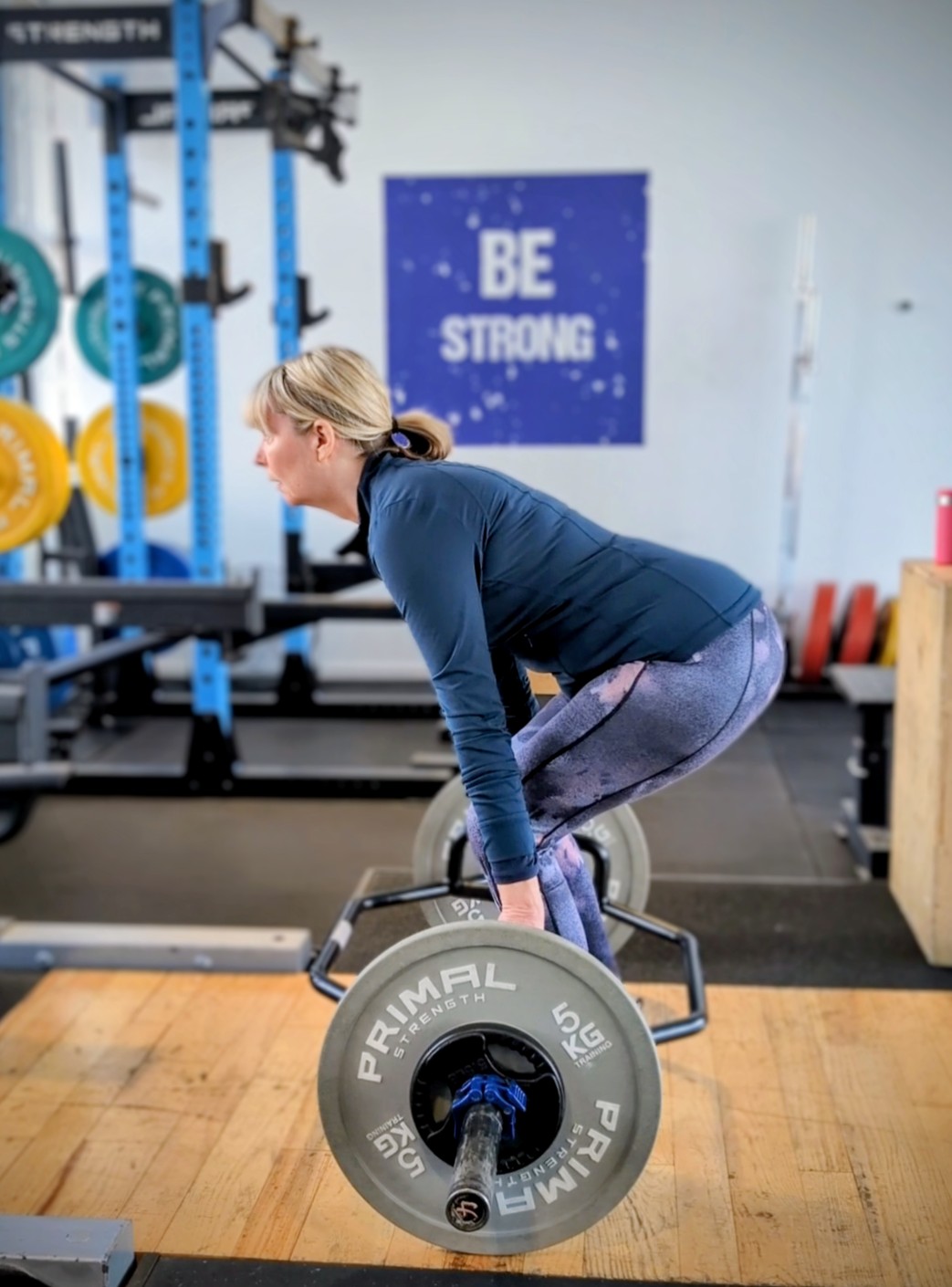
RWF Personal Training Client Brom performing a perfect trap bar deadlift – she’d come into the gym months before terrified she was going to hurt herself, and needed a lot of persuading to start!
Why So Many People Think Exercise Is Dangerous
It’s easy to understand where the perception comes from.
Turn on social media and you’ll see people attempting lifts that would challenge elite athletes, balancing on unstable equipment or collapsing to the floor after workouts that look more like punishment.
Those clips attract millions of views because they’re dramatic. Nobody films themselves spending six months gradually improving their squat technique, getting a little stronger each week and quietly feeling better in everyday life. That’s not exciting enough for Instagram.
Then there are the stories we’ve all heard a million times:
“My mate slipped a disc deadlifting”
“My neighbour wrecked his shoulder bench pressing”
“My cousin said squats ruined his knees”
What we rarely hear is the full story. How much weight were they lifting? Had they been shown how to do the exercise? Were they returning after an injury? Had they ignored pain for weeks beforehand? Was, as is true of 90% of uncoached lifters, their form abysmal?
Without that context, it’s easy to conclude that lifting weights is dangerous when, in reality, poor decisions are often the bigger problem. Weight training in a gym is one of the safest activities you can do. Weight training has a 0.1% chance of serious injury per 100 hours of training – compare that to football, with a 6% chance of serious injury per 100hrs. It’s off the charts in terms of low risk.
What Actually Causes Most Exercise Injuries?
Contrary to popular belief, lifting weights isn’t automatically risky.
Most injuries happen because people ask their body to do more than it’s currently prepared for.
That might mean lifting far too much weight, progressing too quickly, copying somebody far more experienced, using poor technique or believing that every workout has to end with complete exhaustion.
Imagine deciding to run a marathon next weekend despite never having run further than the bus stop. Most people would recognise that as a recipe for disaster.
Strength training is no different.
Your muscles, joints, tendons and ligaments all need time to adapt. Give them that opportunity and they’re remarkably good at becoming stronger and more resilient. Rush the process and you’re much more likely to run into problems.

Jacquie learning the box squat as part of a complete introduction to weight training. No one needs to start with “big weights” on day one!
Your Body Is Designed To Adapt
One of the most fascinating things about the human body is how well it responds to sensible training.
Challenge a muscle and it becomes stronger. Load a bone appropriately and it becomes denser. Practice movements regularly and they become more efficient.
Even confidence grows because things that once felt difficult gradually become routine.
None of that requires you to train like a professional athlete. In fact, the best programmes rarely look particularly impressive. They’re built around consistency rather than epic individual sessions.
A little more weight, an extra rep, some slightly better technique than last week. Those small improvements soon become really significant.
Confidence Often Grows Faster Than Strength
One thing I’ve noticed over the years is that physical changes aren’t always the biggest transformation.
Confidence often changes first. People arrive convinced they’re fragile, and they worry every ache means they’ve damaged something.
They’re afraid to bend down, pick up weights or even ask questions because they think everyone else knows what they’re doing. Within a few weeks, many of those fears have disappeared. Not because we’ve told them to ignore them, but because they’ve discovered what they’re actually capable of, and that proper exercise leaves you feeling better when you leave the gym, not worse.
“I spent years thinking my back was too weak to lift anything heavier than a shopping bag. Now I realise I was stronger than I ever gave myself credit for. I just needed somebody to show me where to start.”
– Sarah, 57
“I honestly expected to hurt myself in the first session and I’d put off starting for months. Instead, I left wondering why I’d spent so long worrying about it. If anything, after a couple of weeks my persistent knee niggle was mostly gone”
– David, 64
RWF PT Christine helping an older client learn to walk again. Not every goal requires throwing big weights around straight away!
The Bigger Risk Is Often Doing Nothing
Ironically, many people avoid exercise because they’re worried about getting injured.
Unfortunately, doing nothing isn’t risk-free either. Without regular strength training, muscles gradually become weaker. Balance often declines. Everyday jobs begin to feel more demanding than they once did.
Carrying heavy shopping, climbing stairs, getting up from the floor, lifting kids – none of these things suddenly become impossible overnight, but they can become noticeably harder if we don’t continue challenging our bodies.
That’s one of the reasons strength training is recommended throughout life, particularly as we get older.
It’s not always about chasing personal bests, it’s about staying able to move, have fun, and be the one who can just do stuff without having to second guess their physical condition.
Why Good Coaching Makes All The Difference
Walking into a gym without a plan can feel intimidating.
Walking into a gym with somebody who understands your starting point is a completely different experience. Good coaching isn’t about finding your limits on day one. It’s about understanding your goals, your previous injuries, your confidence levels and any medical conditions that might affect how you train.
From there, everything is built around gradual progress.
Exercises are chosen because they’re appropriate for you, not because they’re fashionable. Weights increase when you’re ready, not because the random Internet programme says they should.
Your questions should be encouraged, not dismissed – and as coaches, we LOVE questions. It shows us you’re interested, you care and you want to improve. That’s how confidence grows.
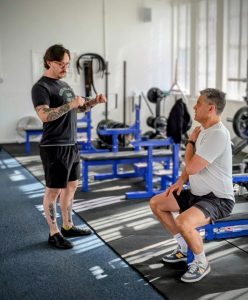
Proper training that reduces injury risk comes from good design, and good communication – and then you lift when you’re ready!
How We Approach It At Real World Fitness
One of the things we’re most proud of is how often new members tell us the gym wasn’t nearly as intimidating as they’d imagined.
That’s because nobody is expected to keep up with anybody else. Some people start with bodyweight movements. Others use resistance machines while they learn how their body moves. Some arrive after surgery or while managing long-term conditions such as arthritis.
Everyone begins somewhere different. What they all have in common is that they progress at a pace that’s right for them.
“I thought I’d be the oldest and least capable person there. Instead, I realised everyone was focused on their own training, and I finally stopped worrying about what other people might think. I wasn’t even the oldest!”
– Margaret, 68
Feeling more confident?
Being nervous about starting exercise doesn’t mean you’re weak, it means you’re sensible. Asking questions, wanting reassurance and looking for the right environment are all signs that you want to do things properly. The aim isn’t to prove how tough you are. It’s to become a little stronger, a little healthier and a little more confident than you were yesterday.
If you’ve been putting off joining a gym because you’re worried about hurting yourself, we’d love to show you that there’s another way to train.
There’s no pressure here, no overcrowded gym floor, and no expectation that you’ll do anything you’re not ready for. Just sensible, progressive coaching designed to help you build strength safely, improve your confidence and enjoy everything that comes with feeling stronger.
Frequently Asked Questions
Am I too old to start strength training?
In most cases, no. People begin strength training safely in their 50s, 60s, 70s and beyond. The important thing isn’t your age – it’s starting at the right level and progressing gradually. A good programme should be built around your current ability, not what you could do twenty years ago.
What if I already have arthritis or an old injury?
Having arthritis or a previous injury doesn’t automatically mean you should avoid exercise. In many cases, appropriately planned strength training can help improve muscle strength, joint support and confidence. The key is choosing suitable exercises and progressing at a pace that works for you. If you have concerns, it’s always worth discussing them with your GP or healthcare professional before starting.
Is strength training safer than people think?
For most people, yes. When exercises are performed with good technique and appropriate weights, strength training has a relatively low risk of injury. Most problems occur when people try to do too much too soon or ignore pain rather than following a sensible programme.
Will I be sore after my first session?
You might experience some muscle soreness, particularly if you haven’t exercised for a while. This is known as Delayed Onset Muscle Soreness (DOMS) and is a normal response to asking your muscles to do something new. It usually settles within a few days and becomes much less noticeable as your body adapts. We’ve covered this in more detail in our article explaining DOMS.
What if I don’t know how to use the equipment?
That’s completely normal. Nobody is born knowing how to use gym equipment. A good coach will explain each exercise, demonstrate how to perform it safely and make sure you’re comfortable before progressing.
Should I wait until I’m fitter before joining a gym?
No. One of the biggest misconceptions is that you need to get fit before you start exercising. Gyms are there to help you become fitter, stronger and more confident. Waiting until you feel “ready” often means putting things off for months or even years.
How do I know if an exercise is causing an injury rather than normal discomfort?
Muscle fatigue and mild soreness after exercise are usually normal, particularly when you’re starting out. Sharp pain, sudden swelling, pain that gets progressively worse or symptoms that stop you moving normally are different and shouldn’t be ignored. If you’re unsure, stop the exercise and seek advice.
How can I reduce my chances of getting injured?
The best way is to start with a programme that’s appropriate for your current fitness level, learn good technique, increase the challenge gradually, recover well between sessions and avoid comparing yourself with more experienced gym users. Consistency will always beat trying to do too much in your first few weeks.
If you’re based in Nottingham and would like to learn how strength training could help you feel stronger, healthier and more confident, book a free personal training session. We’ll discuss your goals, answer your questions and show you how the right programme can help you get more out of life, both now and in the years ahead.
If you’d like to see what we’re about, get in touch or arrange a free 7-day trial.
Book your free Personal Training session today
If you’re in Nottingham and thinking about working with a personal trainer, this is the perfect opportunity to see what professional coaching can do.
Book your FREE personal training session and discover how expert guidance, a structured plan and genuine accountability can help you build strength, improve your fitness and achieve lasting results.
There’s no pressure and no hard sell. Just the opportunity to experience personal training for yourself, ask questions and see how we work.
After one session, you’ll know whether we’re the right gym, the right coach and the right approach for you.
Sign up to the RWF newsletter

