
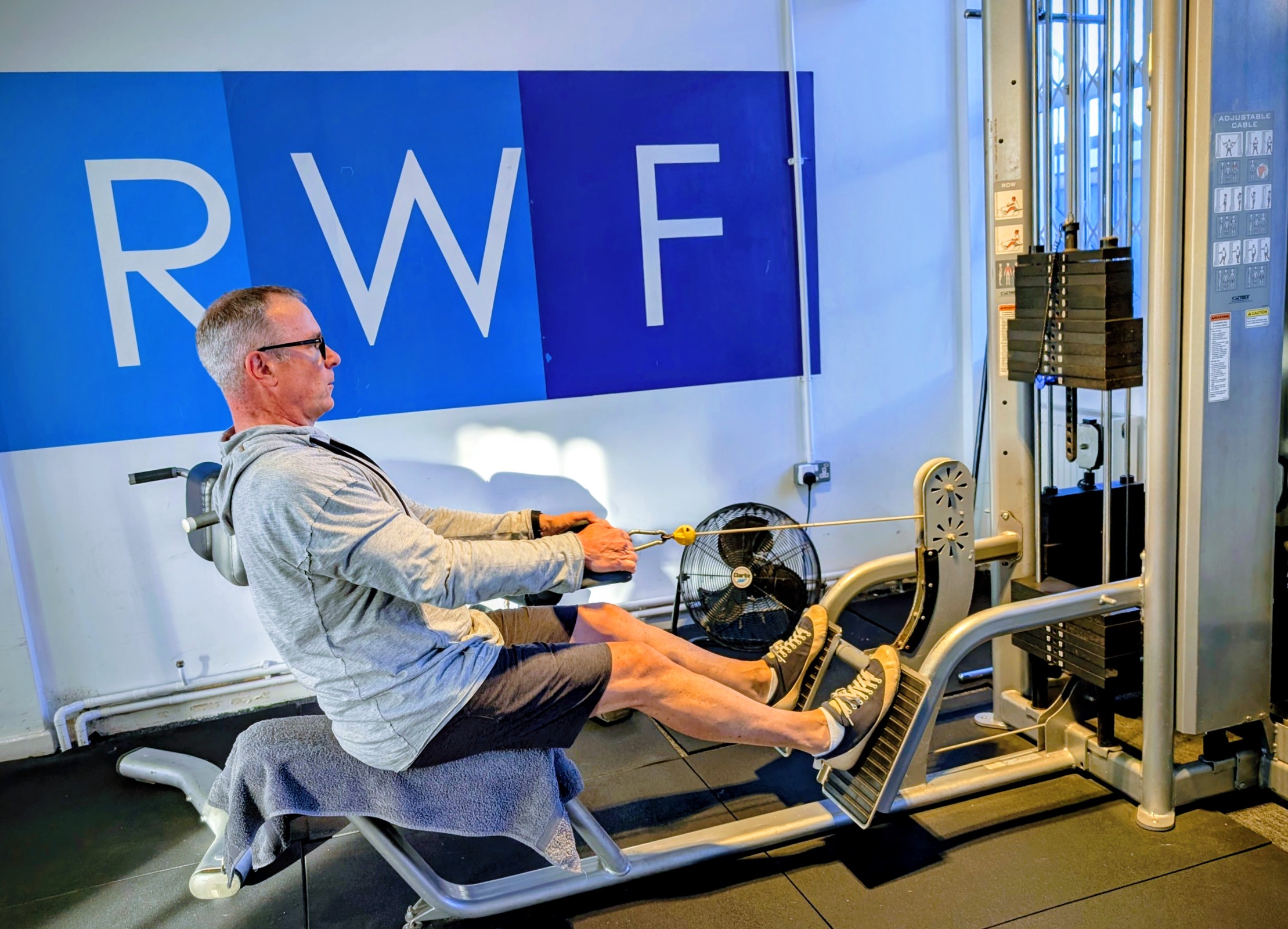
Strength Training with Arthritis: A Practical Guide
If you’ve got arthritis, the idea of lifting weights can sound completely the wrong thing to do.
After all, if your joints already hurt, surely putting more weight through them will only make things worse?
Won’t training on aching joints make them worse? Generally, no, quite the opposite
It’s a completely understandable concern, and one I hear regularly from people who come to see us for the first time. The reality, though, is often the opposite.
For many people with arthritis, the right kind of strength training is one of the most effective ways to reduce pain, improve confidence and make everyday life easier. That’s why strength training is now widely recommended alongside other treatments for many people living with arthritis.
The important words there are the right kind.
This isn’t about pushing through pain, lifting as heavy as possible or trying to train like someone half your age. It’s about using sensible, progressive exercise to make your body stronger and more capable.
We have so much experience in training people over 50, over 60 and beyond – and of course conditions like arthritis, osteoporosis and age-related muscle wastage are common for us to help with.
What is arthritis?
Arthritis isn’t one single condition. It’s a term used to describe a number of conditions that affect the joints.
The two most common forms are:
Osteoarthritis
Osteoarthritis is by far the most common type. It develops when the smooth cartilage that cushions the ends of bones gradually wears down over time.
It commonly affects the knees, hips, hands and spine.
Rheumatoid arthritis
Rheumatoid arthritis is an autoimmune condition where the body’s immune system mistakenly attacks the lining of the joints, causing inflammation, pain and stiffness.
Although the causes are different, many of the principles around maintaining strength, mobility and independence are similar.
Should you exercise if you have arthritis?
For years, people with arthritis were often advised to rest painful joints.
We now know that prolonged rest can actually make many people feel worse.
When muscles become weaker, they provide less support to the joints. Everyday tasks become harder, confidence falls and activity levels often reduce further. It’s a cycle that’s surprisingly easy to fall into, and appropriate exercise helps break that cycle.
Stephen squatting again after a serious fall left him requiring surgery in both knees. Injuries in earlier life a major predictor of suffering arthritis in later life
Why strength training helps
Strong muscles act like a support system around your joints.
If your legs become stronger, your knees don’t have to work quite so hard every time you stand up, climb stairs or get out of the car. If your shoulders become stronger, everyday lifting often feels easier. If your core becomes stronger, your posture and movement can improve.
We focus on building strength gradually, improving movement quality and helping people feel more confident in what their bodies can do.
The benefits people often notice
Everyone responds differently, but many people tell us they notice:
- Less joint pain during everyday activities.
- Greater confidence moving around.
- Improved balance.
- Better stamina.
- Easier stairs.
- More comfortable walking.
- Greater independence.
- Better sleep.
- Improved mood.
The biggest change isn’t always physical. It’s often psychological. When people realise they can squat, lift, push and carry things safely again, they stop seeing themselves as quite so fragile, and can start to feel in control a bit more.
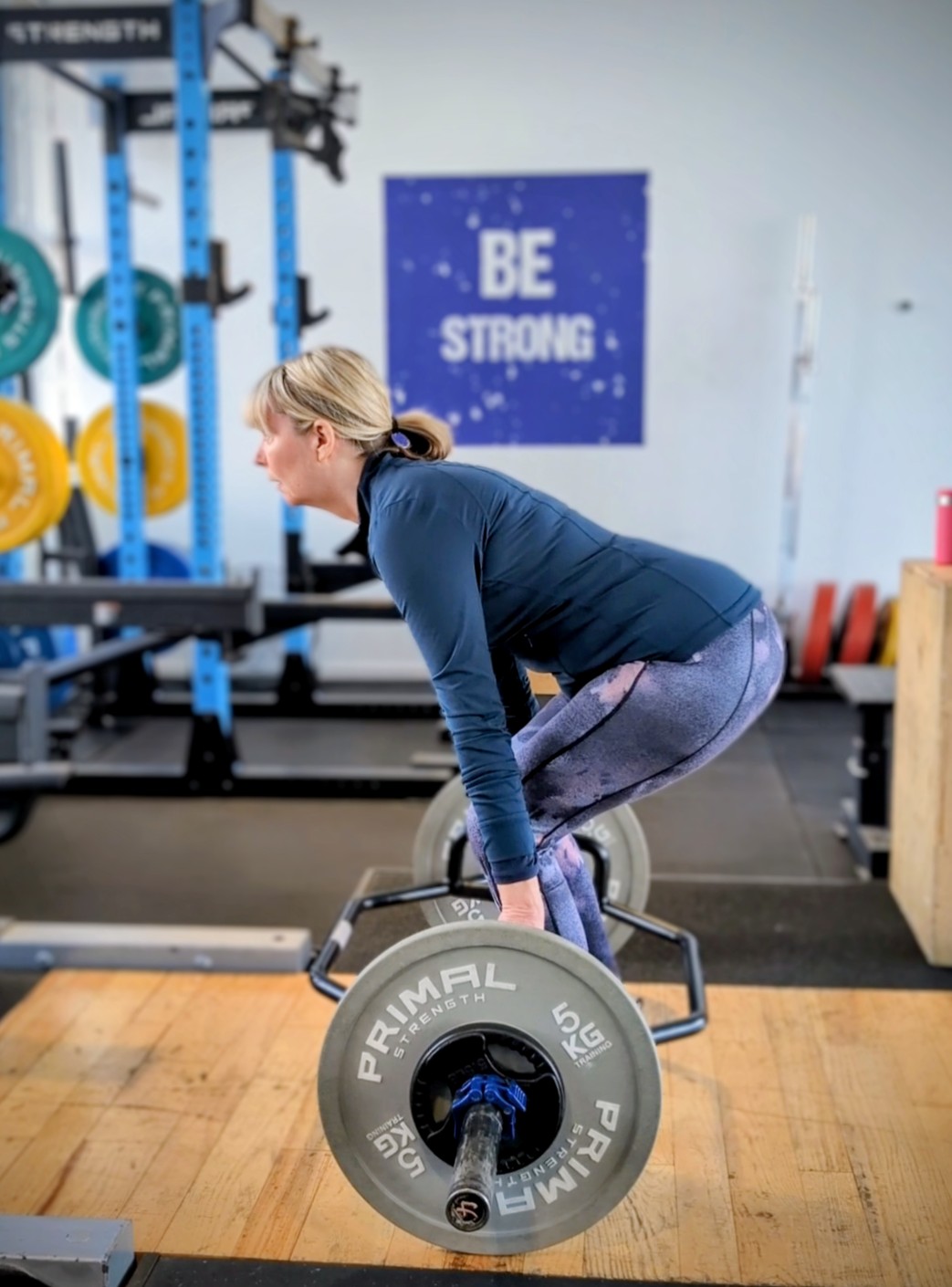
RWF Personal Training Client Brom performing a perfect trap bar deadlift
Isn’t lifting weights bad for worn joints?
This is probably the biggest myth surrounding arthritis.
Appropriately prescribed strength training doesn’t wear joints out. In fact, stronger muscles help absorb forces that would otherwise be transferred directly through the joints.
That doesn’t mean every exercise suits every person. Someone with significant knee arthritis may find one exercise uncomfortable while another feels absolutely fine.
Good coaching is about finding movements that work for your body rather than forcing you into a standard programme.
What exercises are best?
There’s no single perfect exercise programme, as everyone’s symptoms and pain levels, and pain tolerance thresholds, are likely to be different.
Generally, we want to improve the movements you use every day.
That might include:
- Sit-to-stands or squats.
- Step-ups.
- Rows.
- Chest presses.
- Hip hinges.
- Carrying exercises.
- Balance work.
The goal isn’t to make the workout complicated, it’s simply to help everyday life become easier.
Should you exercise during a flare-up?
It depends.
During periods where symptoms suddenly worsen, reducing the intensity or modifying exercises may be sensible.
That doesn’t necessarily mean complete rest. Gentle movement often helps reduce stiffness, but it’s important to listen to your body and seek appropriate medical advice if symptoms are severe or changing significantly more than you’re used to.
Does arthritis mean you’ll eventually lose your independence?
Absolutely not.
Many people with arthritis remain active well into later life. The biggest predictor of independence isn’t having perfect joints, it’s doing anything you can to continue maintaining strength, fitness, balance and confidence for as long as possible.
Those are all things you can influence.
Our approach at Real World Fitness
Many of the people who join us are living with arthritis.
Some haven’t exercised for years because they worried about making things worse. Others have been told they should ‘just keep active’ but were never shown how, or how much is too much, or how much is too little.
Our approach is deliberately simple. We start with what you can do today and we build confidence first. Exercises are adapted around your joints, your mobility and your goals.
Some people want to walk without pain, others want to play with grandchildren, while some simply want to feel stronger than they did six months ago. Whatever the goal, the principle is the same – build strength safely.
So what should you do?
Arthritis doesn’t mean giving up on exercise. In many cases, it means choosing the right kind of exercise.
Strength training won’t cure arthritis, but it can play an important role in helping you stay active, maintain independence and continue doing the things that matter to you.
You don’t have to train like an athlete. You simply have to start and make progress sensibly.
Frequently Asked Questions
Is strength training safe if I have arthritis?
For most people, yes. Exercises should be chosen according to the type of arthritis, the joints affected and your current ability. If you’re unsure, seek guidance from a suitably qualified healthcare professional or experienced personal trainer.
Will lifting weights make my arthritis worse?
Not necessarily. Well-planned resistance training is widely recommended because stronger muscles help support the joints.
Which type of arthritis benefits most from exercise?
Both osteoarthritis and rheumatoid arthritis can benefit from appropriate exercise, although programmes may need to be adapted depending on symptoms and flare-ups.
Should I stop exercising if my joints hurt?
Some discomfort during or after exercise isn’t unusual, particularly when you’re starting. Sharp, severe or worsening pain is different and should be assessed. Good programmes are adjusted and tweaked based on your body’s feedback.
Is walking enough?
Walking is excellent for general health, but it does little to maintain muscle strength. A combination of regular walking and sensible resistance training is often more beneficial.
Can strength training help me avoid surgery?
Exercise can’t reverse arthritis, and some people will still require surgery. However, improving strength and function can often improve quality of life and may help you manage symptoms more effectively. If you ever did need surgery, having trained leading up to it will almost certainly improve the outlook and shorten the recovery time.
Am I too old to start?
Almost certainly not. We’ve helped people begin strength training in their 60s, 70s and beyond. The programme should simply match your current ability.
If you’re based in Nottingham and would like to learn how strength training could help you feel stronger, healthier and more confident, book a free personal training session. We’ll discuss your goals, answer your questions and show you how the right programme can help you get more out of life, both now and in the years ahead.
If you’d like to see what we’re about, get in touch or arrange a free 7-day trial.
Book your free Personal Training session today
If you’re in Nottingham and thinking about working with a personal trainer, this is the perfect opportunity to see what professional coaching can do.
Book your FREE personal training session and discover how expert guidance, a structured plan and genuine accountability can help you build strength, improve your fitness and achieve lasting results.
There’s no pressure and no hard sell. Just the opportunity to experience personal training for yourself, ask questions and see how we work.
After one session, you’ll know whether we’re the right gym, the right coach and the right approach for you.
Sign up to the RWF newsletter

