
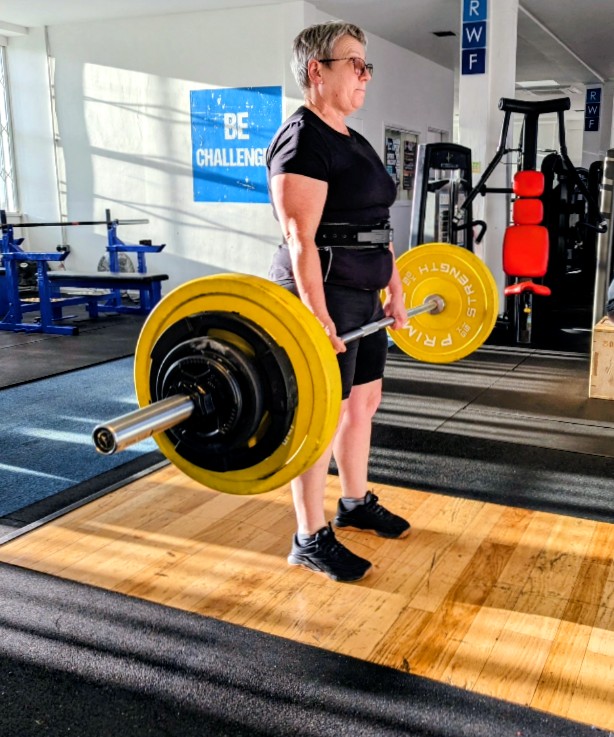
How to Avoid Becoming Frail
Most people don’t wake up one morning and suddenly feel frail.
It usually happens gradually.
Carrying the shopping feels a little heavier than it used to. Getting out of a low chair takes a bit more effort. You begin choosing the lift over the stairs, or you stop walking quite as far because you don’t feel as steady on your feet.
It’s easy to assume these changes are simply part of getting older, but the reality is a little more encouraging.
Whilst ageing is inevitable, becoming frail isn’t. There is a great deal we can do to maintain our strength, confidence and independence for many years to come.
At Real World Fitness, we’ve spent more than two decades helping people of all ages become stronger. One thing we’ve learnt is that the people who stay independent for longest aren’t necessarily the youngest or naturally fittest. They’re the people who continue challenging their bodies in sensible, consistent ways.
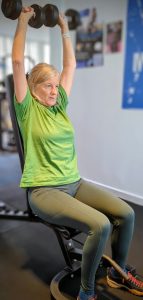
Personal Training client Caroline strengthening her shoulders at RWF Gym Nottingham
What is frailty?
Frailty is a medical term used to describe a reduction in the body’s physical reserve.
In simple terms, it means your body has less capacity to cope with life’s challenges.
Those challenges might be something as significant as surgery or illness, or something much smaller, such as a minor fall, a chest infection or even a few weeks of inactivity.
Someone with good physical reserve often bounces back quickly, whereas someone who is frail may take much longer to recover and can lose confidence, mobility and independence more easily.
Frailty isn’t a disease in itself, and it isn’t something that suddenly appears overnight. It usually develops gradually over many years.
Isn’t frailty just part of getting older?
No.
Growing older increases the likelihood of becoming frail, but age alone doesn’t cause it.
We’ve all met people in their seventies and eighties who remain remarkably active, and others who struggle much earlier in life.
The difference is often how well they’ve maintained their muscle strength, balance, fitness and general health over the years.
That’s really encouraging because these are all things we can influence.
RWF PT Christine helping an older client learn to walk again
What causes frailty?
Frailty rarely has one single cause.
Instead, it usually develops because several factors gradually combine over time.
These may include:
- Loss of muscle mass and strength (known as sarcopenia).
- Spending long periods inactive.
- Poor nutrition.
- Long-term medical conditions.
- Reduced balance.
- A series of falls.
- Loss of confidence following illness or injury.
- Recovering more slowly after periods of inactivity.
Think of it like a savings account – when you’re young and active, your body has plenty in reserve. As those reserves reduce, even relatively small setbacks can have a much bigger impact.
Everyday signs you may be losing physical resilience
Most people don’t recognise frailty in its early stages because the changes happen so gradually.
You may notice that:
- You avoid stairs where possible.
- Carrying shopping feels much harder.
- You need to use your hands to stand up from a chair.
- You’re walking more slowly than you used to.
- You feel less steady on uneven ground.
- You worry more about falling.
- You become tired more quickly during everyday activities.
- You recover more slowly after illness or exercise.
Experiencing one or two of these doesn’t necessarily mean you’re frail, but they are signs that your strength and resilience deserve some attention.
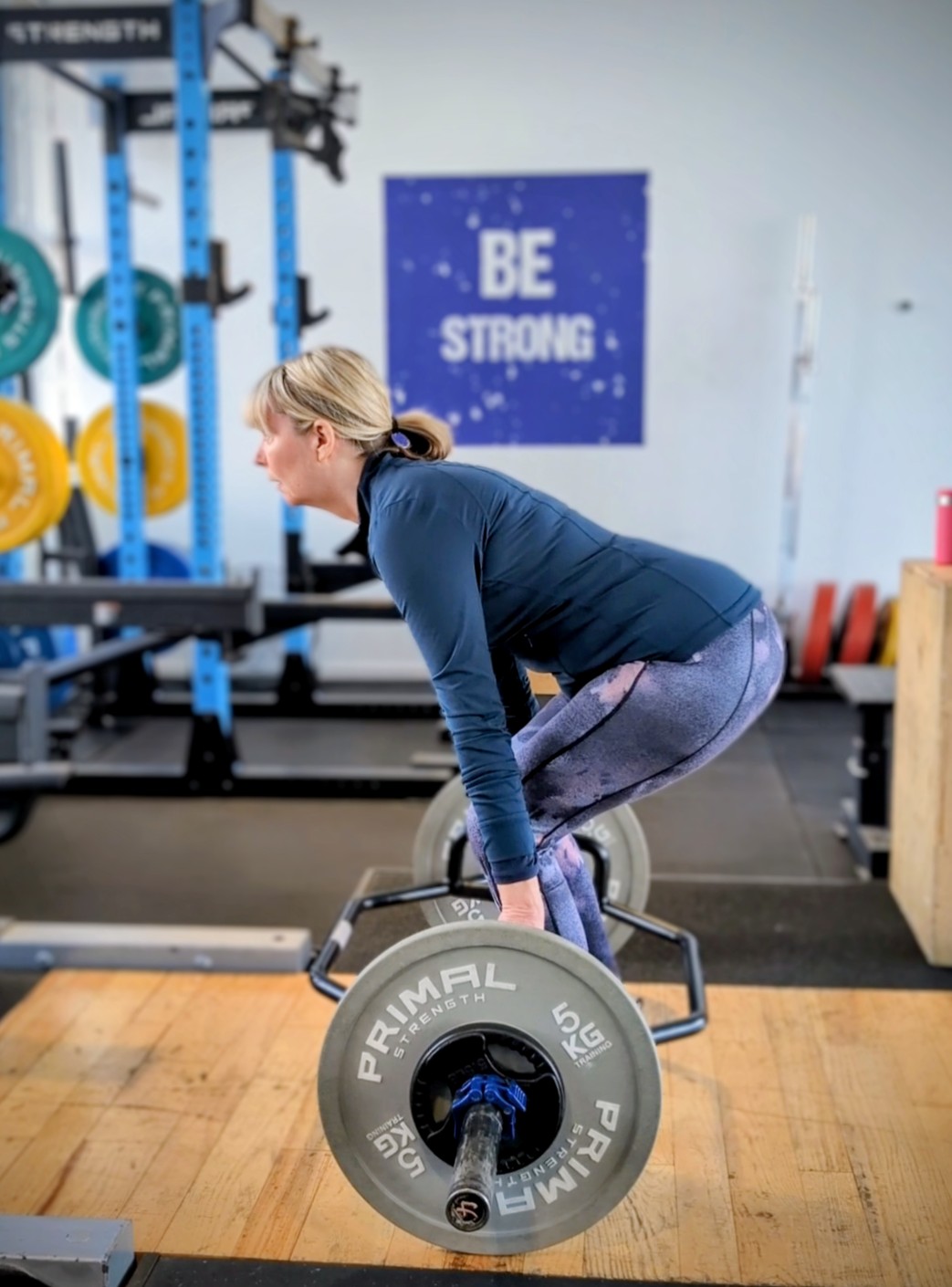
RWF Personal Training Client Brom performing a perfect trap bar deadlift
Frailty and sarcopenia (age related muscle loss) – what’s the difference?
People often confuse frailty with sarcopenia, but they aren’t the same thing.
Sarcopenia refers specifically to the gradual loss of muscle mass and strength that occurs with age.
Frailty is broader. It describes a reduction in your body’s overall ability to cope with physical stress.
The two are closely linked because losing muscle makes it much harder to stay active, maintain balance and recover from setbacks.
If you haven’t already, it’s worth reading our guide to Sarcopenia: Understanding Age-Related Muscle Loss and How Strength Training Can Help, as the two topics go hand in hand.
Can frailty be prevented?
Whilst nobody can stop the ageing process, there is strong evidence that we can reduce the risk of becoming frail.
In many cases, the same habits that improve your health today also help preserve your independence years into the future.
1. Build and maintain strength
Strength training is one of the most effective ways of protecting yourself against frailty.
You don’t need to become a bodybuilder.
A well-designed programme performed two or three times each week can help maintain muscle, improve balance and make everyday tasks feel easier.
Exercises that involve pushing, pulling, squatting, carrying and lifting help develop strength that transfers directly into real life.
2. Eat enough protein
Your muscles need protein to repair and maintain themselves.
Many older adults simply don’t consume enough throughout the day.
A balanced diet containing adequate protein, alongside regular resistance training, gives your body the building blocks it needs to stay strong.
3. Keep moving
The gym is only part of the picture.
Walking, gardening, swimming, cycling, playing with grandchildren and staying generally active all contribute towards maintaining physical resilience.
The more you move, the more capable you usually remain.
4. Challenge your balance
Balance naturally changes with age if it isn’t practised.
Simple activities such as walking on uneven ground, stepping over obstacles, standing on one leg when appropriate (when brushing teeth, waiting for the kettle to boil etc) and continuing to move confidently all help maintain stability.
5. Stay socially and mentally active
Good health isn’t only physical.
Remaining socially connected, continuing hobbies and keeping your mind engaged all contribute towards healthier ageing and greater independence, and often mean that you end up being more physically active as a result.
Is it ever too late to start?
Absolutely not.
One of the most rewarding aspects of coaching is seeing people discover they are capable of far more than they expected.
We’ve worked with people who hadn’t exercised for years and watched them become stronger, more confident and far more capable than they imagined possible.
You may not become as strong as you were at twenty-five, but becoming stronger than you are today is a realistic goal for many people, regardless of age.
Five common myths about frailty
“Frailty is inevitable”
No. Whilst ageing increases the risk, lifestyle has a significant influence on how physically capable we remain.
“Walking is enough”
Walking is excellent for your health, but it doesn’t provide enough resistance on its own to maintain muscle strength.
“I’m too old to lift weights”
Age is rarely the limiting factor.
Appropriately prescribed strength training is suitable for many older adults and can be adapted to individual ability.
“I’ll get injured”
Like any form of exercise, strength training should be introduced sensibly and progressed gradually.
Done properly, it’s one of the safest and most beneficial forms of exercise available.
“There’s nothing I can do now”
There is almost always something you can do to improve your strength, balance and confidence, regardless of your starting point.
What we’ve learnt from coaching older adults
One thing has become very clear over the years.
People rarely tell us they want bigger muscles.
They tell us they want to keep doing the things that matter, they want to travel without worrying about walking around airports, and be able to say yes to day trips.
They want to play with their grandchildren. They want to carry shopping without asking for help. They want to get down onto the floor and know they can get back up again.
Strength training as you get older isn’t really about lifting weights, it’s about preserving choices and prolonging independence.
The stronger and more capable you remain, the more freedom you usually have to enjoy life on your own terms.
When should you seek professional help?
If you’ve noticed your strength declining, you’ve recently experienced a fall, you’re recovering from illness or surgery, or you’re simply unsure where to begin, seeking professional guidance can make a significant difference.
A qualified personal trainer can design a programme that matches your current ability, progresses at an appropriate pace and gives you the confidence to exercise safely.
What do you need to start thinking about?
Frailty isn’t defined by your age.
It’s defined by how much physical reserve your body still has. The encouraging news is that reserve can often be improved.
You don’t have to accept becoming weaker as an unavoidable consequence of getting older. Every strength session completed, every walk taken, every nutritious meal eaten and every small improvement made is an investment in your future independence.
You can’t stop the clock, but you can have a significant influence over how well your body copes with the years ahead.
Frequently Asked Questions
What is frailty?
Frailty is a reduction in the body’s physical reserve, making it harder to recover from illness, injury or other physical stresses.
Is frailty the same as sarcopenia?
No. Sarcopenia refers specifically to age-related muscle loss. Frailty is a broader reduction in physical resilience, although the two are closely connected.
Can frailty be reversed?
Many people can improve their strength, balance and physical function through appropriate exercise, good nutrition and an active lifestyle.
What are the first signs of frailty?
Early signs can include slower walking, reduced strength, difficulty getting up from a chair, poorer balance and finding everyday tasks more tiring.
Does strength training help prevent frailty?
Yes. Resistance training is one of the most effective ways to maintain muscle, improve balance and preserve independence as we age.
Is walking enough?
Walking is excellent for cardiovascular health, but it doesn’t usually provide enough resistance to maintain muscle strength on its own.
At what age does frailty start to develop?
Frailty can develop at different ages depending on health, lifestyle and activity levels. It is not an inevitable part of ageing.
Can protein help prevent frailty?
Protein supports muscle maintenance, particularly when combined with regular strength training.
Is strength training safe for people over 70?
For the vast majority of people, yes. Exercises should be chosen appropriately and progressed gradually based on the individual’s health, ability and medical history.
When should I seek professional advice?
If you’re concerned about declining strength, repeated falls, balance problems or returning to exercise after illness or surgery, it’s sensible to seek advice from an appropriate healthcare professional or an experienced personal trainer.
If you’ve spent years avoiding the gym because you think you’re too old, too stiff or too out of shape, you’re exactly the sort of person we work with every day.
Based in Nottingham, Real World Fitness offers a calm, friendly environment with expert personal training and a gym designed for people who want long-term results rather than quick fixes.
If you’d like to see what we’re about, get in touch or arrange a free 7-day trial.
Book your free Personal Training session today
If you’re in Nottingham and thinking about working with a personal trainer, this is the perfect opportunity to see what professional coaching can do.
Book your FREE personal training session and discover how expert guidance, a structured plan and genuine accountability can help you build strength, improve your fitness and achieve lasting results.
There’s no pressure and no hard sell. Just the opportunity to experience personal training for yourself, ask questions and see how we work.
After one session, you’ll know whether we’re the right gym, the right coach and the right approach for you.
Sign up to the RWF newsletter

