
I’m New to the Gym. What Am I Actually Supposed to Do?
If you’ve never really used a gym before, the exercise is often the least worrying part.
It’s everything around it. Where do you go when you arrive? What do you take with you? Are you allowed to use any machine? How do you know whether somebody has finished with a bench? What happens if you can’t work out how to adjust something? How long are you supposed to stay?

So many of our members are people who never set foot in a gym before. There’s plenty of people at RWF that have been in your shoes.
And, probably the biggest one of all: will everybody know that you’re new?
These might sound like small things once you’ve been training for years, but they aren’t small when you’re walking into a gym for the first time.
So rather than giving you a complicated beginner programme, this is a guide to what actually happens when you start going to a gym.
You don’t need to get fit before you join
This comes up surprisingly often.
People put off joining because they want to lose a bit of weight first, improve their fitness first or generally get themselves into slightly better shape before setting foot in a gym.
You don’t need to. Nobody expects you to arrive already strong, fit or confident. Those are things that can develop after you start training.
You also don’t need to know gym terminology, understand training programmes or know the difference between every machine in the building.
If you’ve never lifted a weight before, that is a perfectly normal place to start. The gym is no different to any other hobby. You’re not expected to know everything before you even start.
What should you take with you?
Not much.
Wear something comfortable that you can move around in and bring suitable trainers. A bottle of water is useful. Some people bring a small towel.
You don’t need specialist clothing and you certainly don’t need to look as though you belong in a fitness advert.
One of the slightly strange things about gyms is that once you have been using one for a while, you stop noticing what everyone else is wearing anyway. Comfort is far more useful than looking the part.
What happens when you actually walk through the door?
This varies enormously between gyms.
At Real World Fitness, your first visit is by appointment. That means you aren’t expected to find the building, walk through the door and somehow work everything out for yourself.
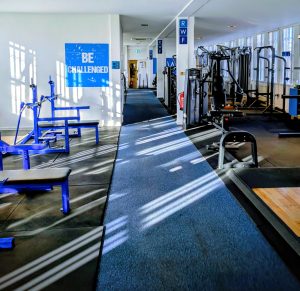
Your first visit is a simple walk around, chat and to show you where everything is. There’s no expectations that you know what to do already!
We can show you where things are, how access works, where the changing rooms and showers are and how the gym is laid out.
That sounds basic, but it is also exactly the sort of basic information that makes a first visit much easier.
Once you know where everything is, the gym stops feeling nerve-wracking very quickly.
What am I actually supposed to do when I get there?
You do not need to train every part of your body and you do not need to leave exhausted.
For your first few sessions, part of what you are doing is simply learning the environment.
You might spend five or ten minutes warming up, use a handful of resistance machines or simple exercises, do a little bit of cardio and go home, and that is absolutely fine.
A first gym session lasting 35 or 40 minutes, where you learn how a few machines work and leave feeling that you could comfortably come back again, is way more useful than an epic 90-minute workout that leaves you unable to walk properly for three days.
There will be plenty of time to make your training harder.
How do I know what weight to use?
Start lighter than you think you need.
There is no prize for guessing the perfect starting weight.
Try the movement. If the weight feels extremely easy, increase it slightly. If you can hardly move it or your technique immediately falls apart, reduce it.
What’s heavy for someone is a warm-up for someone else – what you realise after a while, is no one cares what you’re lifting!
For someone new to strength training, most sets should initially feel controlled. You should be working, particularly towards the final few repetitions, but you shouldn’t feel as though every set is a battle.
As you become more experienced, judging how hard you can and should work becomes much easier.
That ability is learned. Nobody walks into a gym on day one already knowing exactly how much weight they should put on everything. Many people years into training still get it wrong.
What if I don’t know how a machine works?
Ask.
Gym equipment is not always intuitive.
Seats move. Pads adjust. Some machines have several handles. Cable machines can look particularly confusing if you’ve never used one.
There is absolutely nothing embarrassing about not knowing how something works. What would be daft is struggling with a machine for ten minutes because you’re worried somebody might realise you’ve never used it before.
Machines are different between gyms, even if the same manufacturer makes them – even experienced gym-goers can get confused, so don’t beat yourself up for not knowing what every knob and lever does!
I’ve often walked into a new gym on holiday, or when competing, and not been able to immediately figure out how a machine works, or how to change the height on a squat rack – and I’ve been in gyms over 20years. It happens to all of us.
At RWF, we can give beginners a basic induction and show you how equipment works. If somebody needs more detailed help learning exercises or wants a proper training programme, that’s where personal training may be useful.
What if somebody is already using the machine I want?
This is one of those situations experienced gym users barely think about but beginners can find surprisingly awkward.
You have several options.
You can simply do another exercise and come back later.
Or you can ask the person using it how many sets they have left. That is completely normal gym behaviour.
They might say ‘just one’ in which case, you wait for a minute. They might have several sets remaining and offer to let you work in between their sets.
Or you might simply decide to use something else.
A quick note though – nobody wants or expects you to stand six feet away staring at them until they finish!
Am I using something for too long?
Probably not.
If you’re sitting on a machine for twenty minutes scrolling through your phone while other people wait, somebody might eventually get irritated.
If you’re actually exercising, resting for a sensible amount of time between sets and then carrying on, you’re using the equipment exactly as intended.
You don’t need to rush because another person wants the thing you’re on.
Gyms involve sharing equipment. Experienced gym users understand that, and no one, no matter how big they are or how experienced they look, has more right to a bit of kit than you do.
Do I have to wipe everything down?
Basic gym etiquette is fairly simple.
If you’ve left a bench or machine sweaty, wipe it down.
Put dumbbells and weights back where you found them. Don’t leave a loaded bar for the next person to unload.
Try not to take over several pieces of equipment at once when the gym is busy.
You do not need to learn a secret gym rulebook. Most of it is simply consideration for the person training after you, and basic manners.
What if people are looking at me?
People sometimes say ‘nobody in the gym is looking at you’.
That isn’t completely true. People look around gyms just as they look around supermarkets, restaurants and anywhere else containing other human beings.
What they generally aren’t doing is conducting a detailed assessment of your ability. Often, that ‘stare’ is simply a blank look into the middle distance as they recover from a set or just zone out a bit.
Someone might notice that you’re using a machine. They might notice that you’re new. They might be waiting for the dumbbells you’ve got.
That isn’t the same as judging you.
And the people who have trained for years have seen beginners before. They’ve seen strong people, weak people, older people, teenagers, people carrying extra weight, people recovering from injuries and people who have clearly never exercised in their lives.
You are far less unusual, or unique, than you probably feel.
What if I can’t do something everybody else seems able to do?
Then you can’t do it yet.
You might struggle to squat very far. You might not be able to do a press-up. You may find getting onto the floor uncomfortable. Your balance might be poor. A weight that somebody else warms up with might feel incredibly heavy to you.
None of that means you shouldn’t be there, it simply means you’re there to improve and be able to eventually do it.
Training is not an event where you need to demonstrate a certain level of ability before you’re allowed to take part.
How hard should my first few sessions be?
Moderate.
One of the most common beginner mistakes is assuming a workout only counts if it is absolutely exhausting. It doesn’t. If your body isn’t accustomed to strength training, even a fairly modest amount of exercise can be a new stimulus.
There is little benefit in deliberately making your first session so difficult that you’re horribly sore afterwards and dread coming back.
Your aim initially is to establish what you can do, practise the exercises and gradually learn how hard you are capable of working. There will be plenty of opportunity later to push yourself.
Am I supposed to ache afterwards?
You might.
Muscle soreness after unfamiliar exercise is common, particularly during your first few weeks.
You may notice it most when sitting down, climbing stairs or moving a muscle through a big range of movement.
You don’t need to be sore for a workout to have worked, and indeed, extreme soreness isn’t evidence that you’ve had an especially good session.
As training becomes more familiar, most people become much less sore from doing it.
Sharp pain, significant joint pain, sudden swelling or something that feels clearly wrong rather than simply tired and achy deserves more attention.
How long should I stay?
There is no minimum time you need to spend in the gym.
A useful workout could take 30 minutes. Another might take an hour. The length of the session matters much less than what you actually do while you’re there. Quality over quantity is much more important in your early days.
For a beginner, I’d much rather see several manageable 40-minute sessions that become part of normal life than one enormous session every ten days because going to the gym feels like a major event.
How often do I need to go?
For many beginners, twice a week is a very good start.
Three times a week can work brilliantly too.
You certainly don’t need to suddenly reorganise your life around training five or six days every week. Something you can consistently do for the next year will achieve far more than an ambitious routine you manage for three weeks. Once you’ve established the habit, you can always do more.
Your first few visits don’t need to be perfect
This is probably the most useful thing to understand.
Your first session isn’t just about building muscle or improving your fitness. You’re learning where things are. You’re learning how the machines feel. You’re working out what weights you can use. You’re learning how long you like to rest. You’re discovering which exercises you enjoy and which ones you don’t. You’re becoming more comfortable in an environment that initially felt unfamiliar.
All of that counts as training.
After a few visits, you stop thinking about where to put your bag, you stop worrying about how the seat adjusts, and you learn which dumbbells you normally use.
Eventually you walk in, start training and barely think about any of this.
That confidence isn’t something you need before you join a gym. It usually comes from joining one and getting these first few sessions under your belt.
New to the gym in Nottingham?
Real World Fitness is a 24-hour gym in Colwick, Nottingham.
First visits are by appointment, so if you’re completely new to gyms we can show you around, explain how everything works and give you a basic induction rather than simply handing you a door code and leaving you to figure it out.
You can also try the gym with a free seven-day trial before deciding whether you want to join.
If you’re nervous about starting, tell us. It’s a very, very normal conversation for us to have.
Book your free Personal Training session today
If you’re in Nottingham and thinking about working with a personal trainer, this is the perfect opportunity to see what professional coaching can do.
Book your FREE personal training session and discover how expert guidance, a structured plan and genuine accountability can help you build strength, improve your fitness and achieve lasting results.
There’s no pressure and no hard sell. Just the opportunity to experience personal training for yourself, ask questions and see how we work.
After one session, you’ll know whether we’re the right gym, the right coach and the right approach for you.
Sign up to the RWF newsletter

