
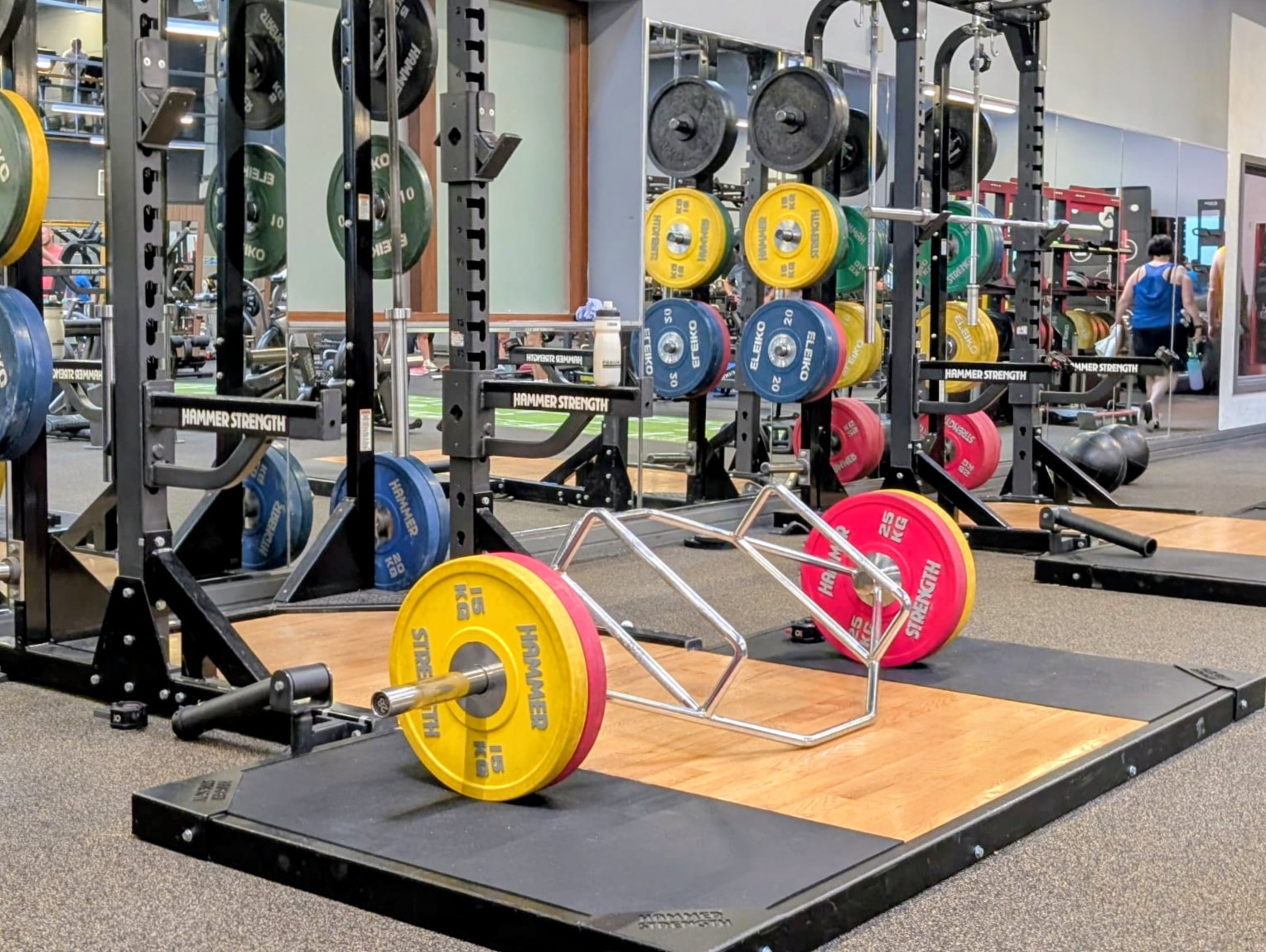
Why Putting Your Weights Away In the Gym Is Part of Training Properly
There are certain gym rules that are so familiar they almost become ignored.
Wipe down the bench. Don’t sit on a machine scrolling through your phone for twenty minutes. Give people enough space when they are lifting. And, of course, put your weights away.
Re-racking weights normally gets talked about as a simple question of manners. You used something, so you put it back. Leaving a loaded bar behind for somebody else to deal with is inconsiderate etc.
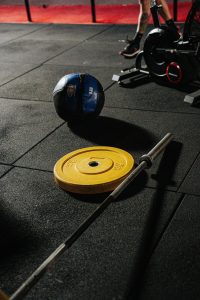
It’s highly, highly unlikely you’ll ever walk into RWF and see kit strewn about – but sadly, that’s Big Commercial gym normality
But as someone who frequently trains people new to gyms, I think there is a more important reason for putting weights away that gets overlooked.
Leaving equipment loaded can genuinely prevent another member from even being able to use it.
That changes it from being a minor point of gym etiquette into something absolutely key to how a shared training environment works.
This isn’t aimed at Real World Fitness gym members
Before anyone from RWF wonders whether this article has been prompted by something they’ve done, it hasn’t.
One of the things I’m genuinely proud of about the culture at Real World Fitness is how well members look after the gym.
We’re open 24 hours a day, and there have been weekends when I’ve been away and the gym has effectively run itself for a couple of days with very little input from me or the PTs.
I’ve then walked back in on a Monday and there hasn’t been a load of clearing up to do.
I reset things at the end of an evening if they need it, but often walk through the gym at the end of a busy day and find nothing major out of place. I genuinely can’t remember the last time I had to unload a heavily loaded bar that somebody had simply abandoned.
That is exactly how a shared gym should work.
I do, however, train at other gyms occasionally, and the experience is very different. There have been plenty of occasions where the first part of my own workout has effectively involved tidying the lifting area before I can start training.
That frequently means taking 150kg off a bar somebody has left on a platform, unloading a squat rack or moving plates back onto storage pegs before I can actually get to the equipment I came in to use.
And I’m fit, I’m pretty strong, and know where things should go. So, I can do all of that.
The important point is that not everybody can.
A loaded squat rack isn’t an available squat rack
I was talking to a client about this recently after training at…well, I won’t name names but it could be any commercial set-up really.
I walked into the weights area and all three squat racks had bars left loaded with somewhere around 100kg to 140kg. The bars had also been left at roughly the right height for an average six-foot male lifter.
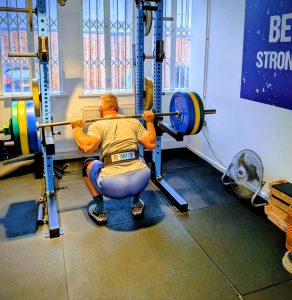
Just because you’re 6ft and can squat over 100kg, doesn’t mean the next person can even reach the bar to deload it, let alone is strong enough to.
So for me, at 7pm after a long day coaching other people, that’s irritating. For somebody else however, those squat racks could effectively have been unusable.
Imagine you’re a woman who has only recently started strength training. Perhaps you’re learning to squat with an empty 20kg bar. You walk over to the rack and there is a bar sitting roughly at your head height with 100kg loaded onto it. Before you can even start your session, you’re expected to remove a 20kg plate from each side of a bar that’s too high for you.
Then another plate, and possibly another. Then you need to move the empty bar, adjust the rack height and start setting up your own exercise. That isn’t a reasonable starting point for somebody who’s new to the gym. It’s, for some of my newer clients, literally impossible for them to do.
Even if they’re technically strong enough to lift a 20kg plate, taking one from a bar at head height is very different from picking one up comfortably from the floor or a storage peg. If they’re not confident handling weights yet, it can be intimidating as well as physically difficult.
Those squat racks were effectively out of use for a good chunk of that gym’s membership base.
Strength isn’t the only issue
This doesn’t only affect beginners.
A smaller person may struggle with plates stored or left at an awkward height. A younger member may not yet be strong enough to safely strip a heavily loaded bar. Someone returning from an injury may deliberately be avoiding lifting plates from awkward positions.
An older member might comfortably perform their own programme but have no reason whatsoever to be wrestling 20kg plates off somebody else’s bar before they start. And, although many won’t admit it, there are plenty of experienced gym users who simply aren’t particularly strong.
That’s completely normal. A gym shouldn’t be a competition to see who can lift the heaviest weight before they’re even allowed to use the equipment.
If somebody can safely squat 30kg, the squat rack should be just as usable for them as it is for somebody squatting 200kg. Leaving 180kg on the bar changes that completely and ruins the gym experience.
There is also a confidence barrier
This is perhaps the part experienced gym users forget most easily.
If you’ve trained for twenty years, walking up to a rack, stripping a bar, moving the J-hooks and setting everything up again probably doesn’t register as anything unusual. You’ve handled thousands of weight plates. You understand how the rack works. You know how to unload a bar safely.
A new member doesn’t necessarily feel like that.
They may already be slightly unsure whether they’re using the correct piece of equipment or whether somebody is still using it. They might wonder whether the person who loaded the bar has just walked away for a moment. They might not know how to move the rack attachments.
They may worry that they’re going to look stupid taking everything apart. So rather than dealing with it, they choose another exercise, or skip the exercise entirely.
I’ve coached enough people who were initially nervous about walking into a weights area to know that seemingly small obstacles can be surprisingly significant. Someone shouldn’t need several months of gym confidence before they’re entitled to use an empty squat rack.
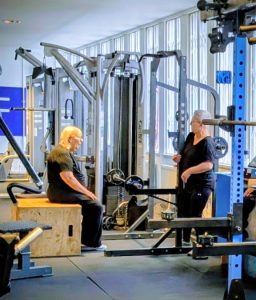
A nervous new lifter, or an older member, shouldn’t have to worry about whether the kit is even going to be useable that day
The person who loads it should unload it
There is a simple principle here.
If you’re strong enough to load the weight onto the bar, you’re strong enough to put it back.
Your haven’t finished on a bit of kit until you’ve left it ready for the next person.
That means taking the plates off the bar, putting them back onto the correct storage points and leaving the bar somewhere sensible.
The same applies to dumbbells. Leaving a pair of 40kg dumbbells in the middle of the floor might not inconvenience another strong lifter very much. Someone who struggles to even move one of them now has to work around them.
And putting dumbbells back somewhere vaguely near the rack isn’t really the same thing as putting them away. A well-organised dumbbell rack means people can immediately see whether the pair they want is available.
Nobody should have to wander around the gym looking behind benches for the missing 12kg dumbbell.
There is a gym safety issue too
Loose equipment creates unnecessary hazards.
Plates left on the floor become something to step over. Dumbbells left beside benches narrow walkways.
Loaded bars can make it harder for people to safely adjust equipment. A plate left leaning against a rack can easily be knocked over.
None of these things are particularly dramatic in isolation, but a busy free-weights area works because everybody has a reasonable idea of where equipment should be.
When equipment is repeatedly left wherever the previous person finished using it, the whole training space becomes a mess in minutes.
Your strength doesn’t give you ownership of the rack
Heavy lifting can sometimes produce a slightly strange bit of gym culture.
Someone loads up a bar, performs a big squat or deadlift and somehow the enormous stack of plates becomes part of the achievement. But once you’ve finished your set, nobody else should have to deal with your workout. And, no one cares what you lifted. They just want to train themselves.
Whether you’ve squatted 40kg or 240kg doesn’t change the basic principle. The equipment is shared. You don’t own the gym because you’re stronger.
In fact, the stronger you become, the easier it should be to understand this. If you’ve spent years training, you should be one of the people making a gym easier for less experienced members to use, not harder. Many stronger lifters understand this and are better than the newer, or ego, lifters at putting their stuff away.
Good gyms develop good habits
One reason I think this works well at Real World Fitness is that behaviour becomes cultural.
People walk into a tidy training area. The bars are unloaded. The dumbbells are where they should be. The plates are on the storage racks, so that’s how they tend to leave it for the next person.
It doesn’t require somebody wandering around policing everyone. Members simply understand that the gym belongs to everybody using it.
Members see us as PTs clearing down a station with our clients before moving to the next exercise. That becomes something that is normal, and expected. Leading by example is a huge part of changing any gym culture – no-one is going to tidy up after themselves if the PTs or owners can’t be bothered.
That’s a major problem at big chain gyms because no-one takes ownership. The members think it’s the PTs job. The PTs think it’s the gym owners job. The gym owners think the members and PTs should tidy up after themselves. The cleaners end up cleaning around strewn around kit. As a result, nothing happens until someone get’s fed up enough to spend 20 minutes resetting the gym at night, only for it to resemble a scene from a zombie apocalypse again by 7am.
A very simple gym rule
Putting your weights away is polite.
But that’s probably the least compelling reason to do it. It keeps equipment accessible to people who are smaller, weaker, younger, older, injured or simply less confident than you are.
It keeps walkways clear. It makes equipment easier to find, and it means the person following you gets to start their workout rather than tidying up after yours.
A shared gym only really works if people leave equipment ready for the next person.
So when you’ve nailed your final set, unload the bar. Until then, you haven’t really finished your session.
Book your free Personal Training session today
If you’re in Nottingham and thinking about working with a personal trainer, this is the perfect opportunity to see what professional coaching can do.
Book your FREE personal training session and discover how expert guidance, a structured plan and genuine accountability can help you build strength, improve your fitness and achieve lasting results.
There’s no pressure and no hard sell. Just the opportunity to experience personal training for yourself, ask questions and see how we work.
After one session, you’ll know whether we’re the right gym, the right coach and the right approach for you.
Sign up to the RWF newsletter

