
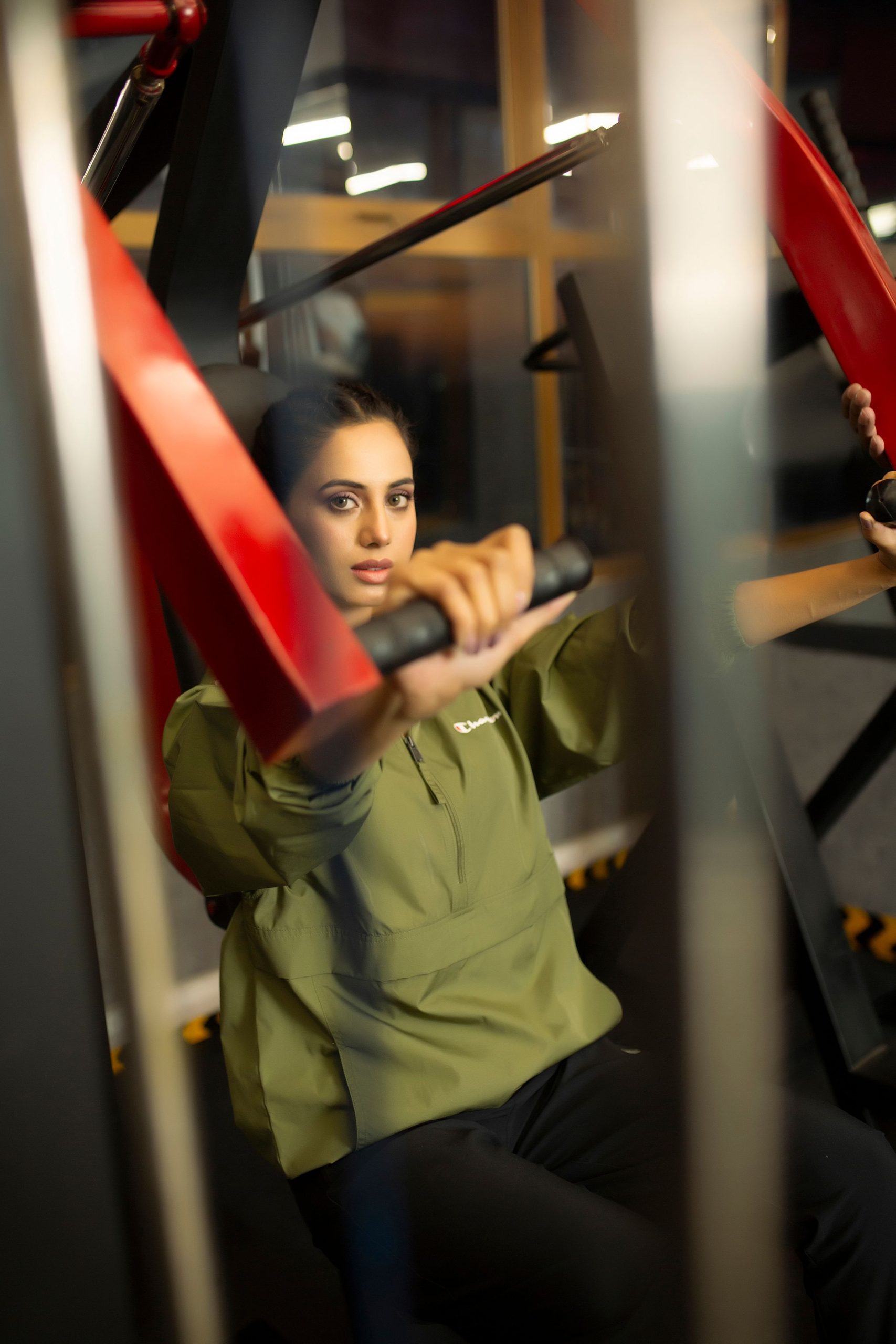
Machines vs Free Weights: Which Is Better for Strength and Muscle?
The ‘free weights vs machines’ debate is as old as the ‘full body vs splits’ and ‘real food vs protein shakes’ debates.
Barbells and dumbbells are often treated as the serious option, while resistance machines are dismissed as something for beginners, older people or those who don’t really know how to train.
The reality is much less dramatic, and much more nuanced.
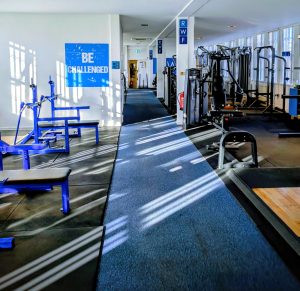
RWF have a large selection of free weights and machines – no one tool is the ‘best’ for everyone
Both machines and free weights can build strength and muscle extremely effectively. Which one you should use depends on what you are trying to achieve, your experience, your physical limitations and, sometimes, simply which exercise suits you better.
At Real World Fitness in Nottingham, we have deliberately invested in both. Our members use racks, barbells and dumbbells alongside leg presses, leg extensions, hamstring curls, chest and shoulder presses, rows, cable stations and more specialised equipment. There is a good reason for that. They do slightly different jobs.
Do free weights build more muscle than machines?
Probably not.
A 2023 systematic review and meta-analysis compared free-weight and machine-based resistance training and found no significant difference in muscle growth between the two. Overall strength improvements were also similar when strength wasn’t assessed using the specific exercise people had trained.
More recent research in previously untrained women has reached a similar conclusion, with machine and free-weight training producing comparable increases in muscle size.
That should immediately get rid of one of the biggest myths surrounding gym equipment.
Your muscles don’t know whether the resistance comes from a £5,000 commercial resistance machine, or a barbell, or your bodyweight. They respond to tension, effort and progressively increasing demands.
If somebody trains hard enough, uses an appropriate range of movement and gradually gets stronger over time, both can work extremely well.
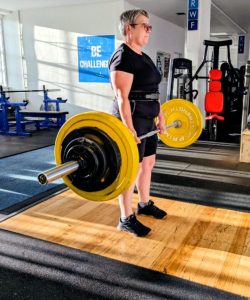
Free weights often get the internet nod of approval over machines, but you need to pick the appropriate thing for your goal, not just the ‘toughest’ one
But strength is more specific
There is an important qualification.
If you want to become particularly good at squatting with a barbell, you need to squat with a barbell.
If you want to improve your bench press, at some point you need to bench press.
Research comparing machines and free weights tends to find a degree of specificity. People who train on free weights become particularly good at free-weight strength tests, while those using machines improve particularly strongly on the machines they have practised.
That isn’t surprising.
Strength isn’t purely about the size of a muscle. There is also a skill involved in producing force through a particular movement.
A barbell squat requires you to control the bar, maintain your balance, brace your trunk and coordinate several joints at once. A leg press can train many of the same muscles very hard, but it doesn’t require the same skill.
That doesn’t make the leg press inferior. It simply makes it different.
The big advantage of free weights
Free weights give you freedom of movement.
With a dumbbell, kettlebell or barbell, your body isn’t being guided through a completely fixed path by the machine. You have to control the load yourself.
That can make free-weight exercises particularly useful when we want to develop coordination, balance, bracing and whole-body strength alongside muscle strength.
Exercises such as squats, split squats, deadlifts, presses, rows and loaded carries can also allow several joints and muscle groups to work together.
For somebody who wants to become generally stronger, improve sporting performance or simply retain their physical capabilities as they get older, those are useful qualities.
But there is a mistake people make here too.
Calling something a “free-weight exercise” doesn’t automatically make it functional, and using a machine doesn’t suddenly make an exercise useless in everyday life.
If stronger quadriceps help you climb stairs, get out of a chair or walk up a hill more comfortably, it doesn’t particularly matter whether some of that additional strength was developed with squats or a leg press.
Where machines can actually be better
There are plenty of situations where I deliberately choose a machine rather than a free-weight exercise.
One is when balance or technique would otherwise become the limiting factor.
Take a hamstring curl. We can train the hamstrings with various free-weight movements, but if I simply want somebody to work their hamstrings hard through knee flexion, a hamstring curl machine is an extremely straightforward way of doing it.
The same applies to leg extensions for the quadriceps or a chest press when somebody wants to train the chest without having to stabilise dumbbells.
Machines can also be useful later in a workout.
Once somebody is already tired from squats, for example, I may not want them performing another technically demanding free-weight exercise. A leg press or leg extension allows us to add more useful work without fatigue affecting balance and coordination to the same degree.
And for somebody recovering from an injury, working around a joint problem or simply finding a particular free-weight exercise uncomfortable, the different movement offered by a machine can sometimes provide a very useful alternative.
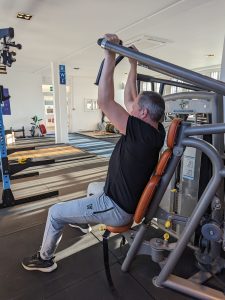
Machines allow you to add in a lot of extra training volume when you’re tired at the end of a session, without quite as much technical concentration needed
Are machines safer than free weights?
Not automatically.
Machines are often described as safer because the weight follows a predetermined path and there is usually less chance of dropping it.
That can certainly make some exercises easier to learn and easier to perform without a spotter.
But machines still need to be set up properly. Seat position, range of movement and the alignment of the machine all matter. A machine that doesn’t suit your proportions can actually feel considerably worse than a free-weight exercise where you are able to choose your own movement path.
Machines that give less autonomy to the user also can generate repetitive strain type injuries over time.
Likewise, free weights aren’t inherently dangerous.
We coach complete beginners to use dumbbells, kettlebells and barbells all the time. You simply start with appropriate loads and learn the movement before worrying about how much weight is on the bar.
The problem isn’t usually the equipment. It is asking someone to do more than they are currently capable of controlling.
What should beginners use?
Both.
I don’t see much value in telling someone who has never trained before that they must spend their first few months exclusively on machines before they are allowed near a dumbbell.
Equally, there is no PT prize for putting a complete beginner underneath a barbell on their first gym session simply because barbell training is supposedly more ‘proper’.
We choose exercises the person can perform successfully.
For one new member that might mean a leg press, chest press and seated row alongside some simple dumbbell exercises.
Another may be perfectly comfortable learning a goblet squat, dumbbell press and cable row from day one.
The objective isn’t to graduate from machines to free weights. It is to become stronger and more capable with whatever you’re using.
What about older people?
This is one area where I particularly dislike the idea that machines are somehow the ‘safe’ option and free weights belong to younger people.
We train plenty of people in their 60s, 70s and beyond at RWF, and there can be a place for both.
Machines can be excellent because they allow us to load muscles progressively without demanding large amounts of balance or technical skill. That can be particularly useful when somebody is starting from a relatively low strength level.
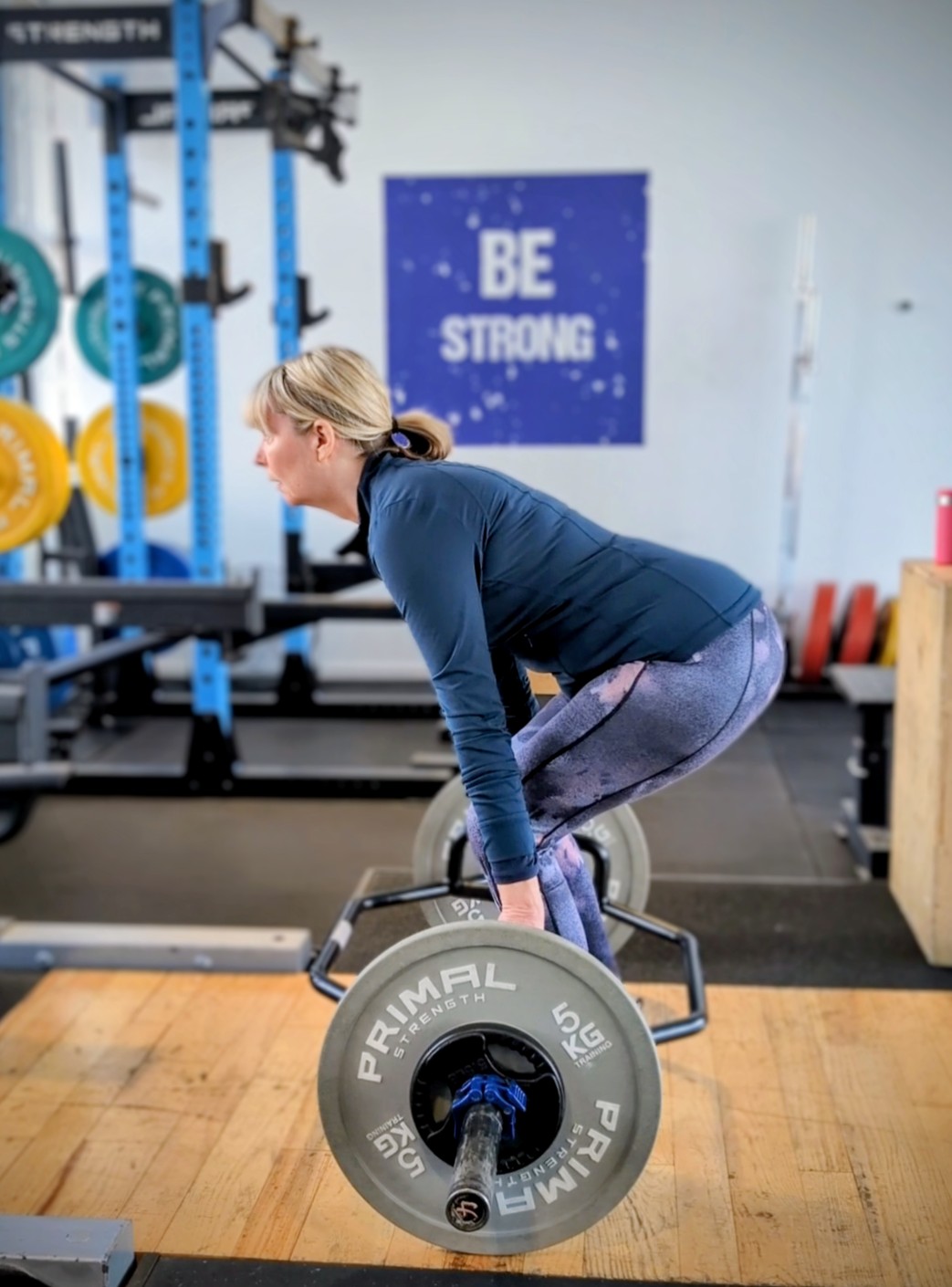
Brom is 62 and perfectly capable of using free weights – it’s not ‘straight onto machines’ simply because you’re a bit older
But balance, coordination and the ability to control your own body are also increasingly valuable as we get older. So, rather than removing every exercise that involves those qualities, it usually makes sense to train them at an appropriate level.
A programme might include a leg press for some heavier leg training alongside a light goblet squat, step-up or split squat where the person has to control their own position.
The balance between the two will vary enormously between individuals.
Machines are not just for beginners
Experienced lifters often use machines extensively.
Bodybuilders have always understood their value because machines can make it easier to train a particular muscle hard without another part of the body becoming the limiting factor.
Strength athletes use them as assistance work around their barbell training.
People playing sport can use them to add muscle and strength without every exercise having to be technically demanding.
Sometimes a machine simply feels better. If a chest press lets somebody train their chest hard without irritating a shoulder, I don’t care that somebody on the internet thinks a barbell bench press is more impressive.
The exercise is there to serve the person. The person isn’t there to serve the exercise.
You don’t have to choose a side
This is probably the most useful answer to the whole machines versus free weights debate.
For most people, a mixture of the two is better than becoming ideologically attached to either one.
You might squat with a barbell, use a machine for hamstring curls, bench press with dumbbells, perform your rows on a cable and finish with a machine shoulder press.
There is nothing inconsistent about that. You’re simply choosing the most appropriate tool for each job.
Research supports that fairly unexciting conclusion. Machines and free weights can both produce substantial improvements in strength and muscle, and neither needs to be treated as the superior form of resistance training.
After more than 20 years of coaching, that fits pretty well with what I’ve seen in practice too. The people who make good progress aren’t generally the ones worrying about whether every exercise is theoretically optimal. They are the ones who train consistently, learn to perform their exercises properly and gradually ask their body to do a little more.
Whether some of that happens with a barbell or a resistance machine is considerably less important.
Frequently Asked Questions
Are free weights better than machines for building muscle?
No clear advantage has been found. Research directly comparing the two suggests that both can produce similar muscle growth when the training itself is comparable.
Are machines better for beginners?
They can be useful because they reduce some of the balance and coordination demands of an exercise, but beginners don’t need to train exclusively on machines. Simple free-weight exercises can also be introduced from the start.
Can you get strong using only machines?
Yes. You can become considerably stronger using resistance machines. However, strength is partly specific to the movements you practise, so someone wanting to become good at barbell squats, bench presses or other particular free-weight exercises needs to practise those exercises too.
Are free weights better for older people?
Neither option is automatically better. Machines can provide controlled resistance while free weights can help develop balance, coordination and movement skills. In practice, we often use a combination.
Should I use machines or free weights if I have an injury?
That depends on the injury and the movements you can tolerate. Sometimes a machine provides a more comfortable alternative; in other cases the freedom to adjust your movement with dumbbells or cables works better. The exercise should be selected around the individual rather than assuming one type of equipment is always safer.
Training at Real World Fitness Nottingham
Real World Fitness in Colwick has a deliberately broad range of resistance equipment, from squat racks, platforms, barbells and dumbbells through to leg presses, cable stations and dedicated resistance machines.
We don’t expect members to choose between being a ‘free-weight person’ or a ‘machine person’.
Use whichever equipment helps you train well, progress consistently and achieve what you actually came to the gym for.
Book your free Personal Training session today
If you’re in Nottingham and thinking about working with a personal trainer, this is the perfect opportunity to see what professional coaching can do.
Book your FREE personal training session and discover how expert guidance, a structured plan and genuine accountability can help you build strength, improve your fitness and achieve lasting results.
There’s no pressure and no hard sell. Just the opportunity to experience personal training for yourself, ask questions and see how we work.
After one session, you’ll know whether we’re the right gym, the right coach and the right approach for you.
Sign up to the RWF newsletter

