

Getting Back Into Exercise After Years Away
It’s surprisingly common for people to think they’re the only one who’s let exercise slip. They’ll apologise for not training for years, tell me they know they should have done something sooner, or admit they’re embarrassed that they’re having to start again.
The reality is that this is one of the most common conversations I have when meeting potential new clients.
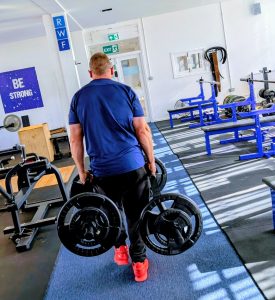
Nick back in the gym after a 10 year hiatus – and proceeding to demolish my bench PB 🙂
Very few people make a conscious decision to stop exercising. It normally happens because life gets in the way. A new job demands more of your time. Children come along. An injury forces you to take a break. You move house, look after ageing parents or simply find yourself with a hundred other priorities that seem more important at the time. Missing a week doesn’t matter, then a month goes by, and before you know it it’s been five or ten years since you last trained consistently.
One sentence crops up time and time again – “I used to be really fit.”
Sometimes that means they played rugby every weekend. Sometimes they were regular runners or keen gym-goers. Other times they simply remember feeling stronger, having more energy and finding everyday life easier than they do now. Whatever their background, they all have one thing in common. They’re looking backwards, wondering whether they’ve left it too late to start again.
The answer is almost always no.
Stop Trying To Pick Up Where You Left Off
One of the biggest mistakes people make is expecting too much of themselves too quickly. They remember what they were capable of ten or fifteen years ago and assume that’s where they should be now. The trouble is that they’re comparing themselves with a younger version of themselves who had different responsibilities, more spare time and, in many cases, a body that recovered far more easily.
That comparison doesn’t help, and arguably holds you back more than it should.
Your aim isn’t to prove you can still do what you did in your twenties. It’s to become fitter than you are today. They’re very different goals, and once people accept that, they usually enjoy training a great deal more – and can sometimes get back to those levels, or surpass them, ‘by accident’.
I’ve seen plenty of people throw themselves into six sessions a week because they feel they need to make up for lost time. They train until they’re exhausted, spend the next few days sore, then struggle to fit it around work and family life. Within a month they’re back where they started, convinced they just don’t have the discipline. Most of these people quit altogether. It’s why I almost never advise training 5 or 6 times a week unless you genuinely love it, have the time for it, and are going to do it very intelligently.
In reality, these people simply choose a plan that doesn’t fit their life.
Consistency Beats Enthusiasm
If you’ve been away from exercise for several years, you don’t need the perfect programme. You need one that you’ll still be following six months from now.
For most people, that means starting more gently than they expected. Two well-planned strength training sessions each week can make a remarkable difference if you stick with them. Add in a little more walking, a bit more day-to-day movement and some patience, and you’ll often achieve far more than someone who starts with great enthusiasm but burns themselves out within a few weeks.
People often underestimate what steady progress looks like. They expect dramatic changes every week, when in reality the biggest improvements are usually much more under the radar. Carrying the shopping doesn’t feel quite as much of a chore. You have more energy at the end of the working day. You stop worrying about whether you’ll be able to keep up with the children on the playing field.
Those are the changes that tell me someone is on the right track.
You’re Probably More Capable Than You Think
One thing I’ve learnt over the years is that people are often far more capable than they give themselves credit for. They’ve simply become de-conditioned.
There’s an important difference.
Being out of shape isn’t a permanent state. Your body responds remarkably well when you start asking it to do a little more. Initial strength returns and fitness improves within weeks, not months.
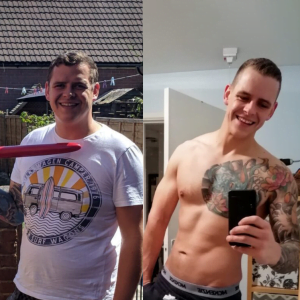
Matt getting himself back in shape in his late twenties after falling into being inactive after his teen years
It doesn’t happen overnight, but it usually happens much faster than people expect.
That’s why I always encourage people not to judge themselves by the first session. The first few weeks are about rebuilding habits and confidence as much as they are about improving fitness. Once those habits are in place, everything else becomes much easier.
Don’t Wait Until You Feel Ready
Another phrase I hear regularly is, “I’m going to lose a bit of weight first, then I’ll join a gym.”
I understand why people think that way, but it’s rather like saying you’ll learn to swim before booking swimming lessons.
You don’t need to arrive fit. You don’t need to know how every machine works. You don’t need expensive gym clothes or years of experience.
You simply need to be willing to start.
Everyone who’s now comfortable in a gym had a first session. They all had exercises they found awkward. They all wondered whether they were doing things properly. The difference is that they kept turning up.
A Real-World Example
One client came to see me two years ago after more than ten years away from regular exercise. Work had become busier as he’d started his own business, family life had been taken over with two young kids in quick succession, and training had gradually disappeared without him really noticing. He wasn’t looking to get back to the physique he had in his twenties. He simply wanted to feel stronger, lose a little weight and stop feeling as though everyday life was becoming harder than it needed to be.
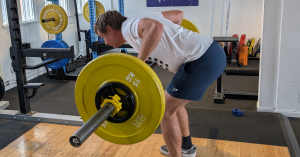
Chris got back into training after work, family life and just not being 20 anymore caught up with him!
We started doing three sessions each week together and resisted the temptation to do anything outside of those sessions. Within a few months he was noticeably stronger, moving better and enjoying training again. What struck me most wasn’t the physical change, though. It was that he’d stopped seeing exercise as another job on his to-do list. It had become part of his routine again, and that’s usually the point where people make lasting progress.
Don’t ‘Get Started Again’
If you’ve spent years away from exercise, try not to think of it as starting again. Think of it as picking up where life interrupted.
You don’t need to make up for the sessions you missed, punish yourself for the weight you’ve gained or prove anything to anyone else. All you need to do is start from where you are today and be consistent enough to keep moving forwards.
Most of the people I meet wish they’d started six months earlier, and very, very few wish they’d waited another six months. If you’ve been thinking about getting back into exercise, there’s probably no perfect time coming along. You may as well get cracking today.
If you’re based in Nottingham and would like to learn how strength training could help you feel stronger, healthier and more confident, book a free personal training session. We’ll discuss your goals, answer your questions and show you how the right programme can help you get more out of life, both now and in the years ahead.
If you’d like to see what we’re about, get in touch or arrange a free 7-day trial.
Book your free Personal Training session today
If you’re in Nottingham and thinking about working with a personal trainer, this is the perfect opportunity to see what professional coaching can do.
Book your FREE personal training session and discover how expert guidance, a structured plan and genuine accountability can help you build strength, improve your fitness and achieve lasting results.
There’s no pressure and no hard sell. Just the opportunity to experience personal training for yourself, ask questions and see how we work.
After one session, you’ll know whether we’re the right gym, the right coach and the right approach for you.
Sign up to the RWF newsletter

