
How Often Should You Change Your Gym Workout?
There is a pervasive idea in gyms that you need to keep changing your workout.
Do the same exercises for too long and apparently your body will ‘get used to them’. Your muscles will stop responding, progress will grind to a halt, and you’ll need a new programme, different exercises or perhaps an entirely different style of training to shock everything back into action.
There is a small amount of truth buried in there, but probably not in the way it is usually presented.
Your body does adapt to training. That’s the entire point of training. But adaptation isn’t a reason to immediately abandon what you have been doing. Quite often, adaptation is simply evidence that what you are doing is working.

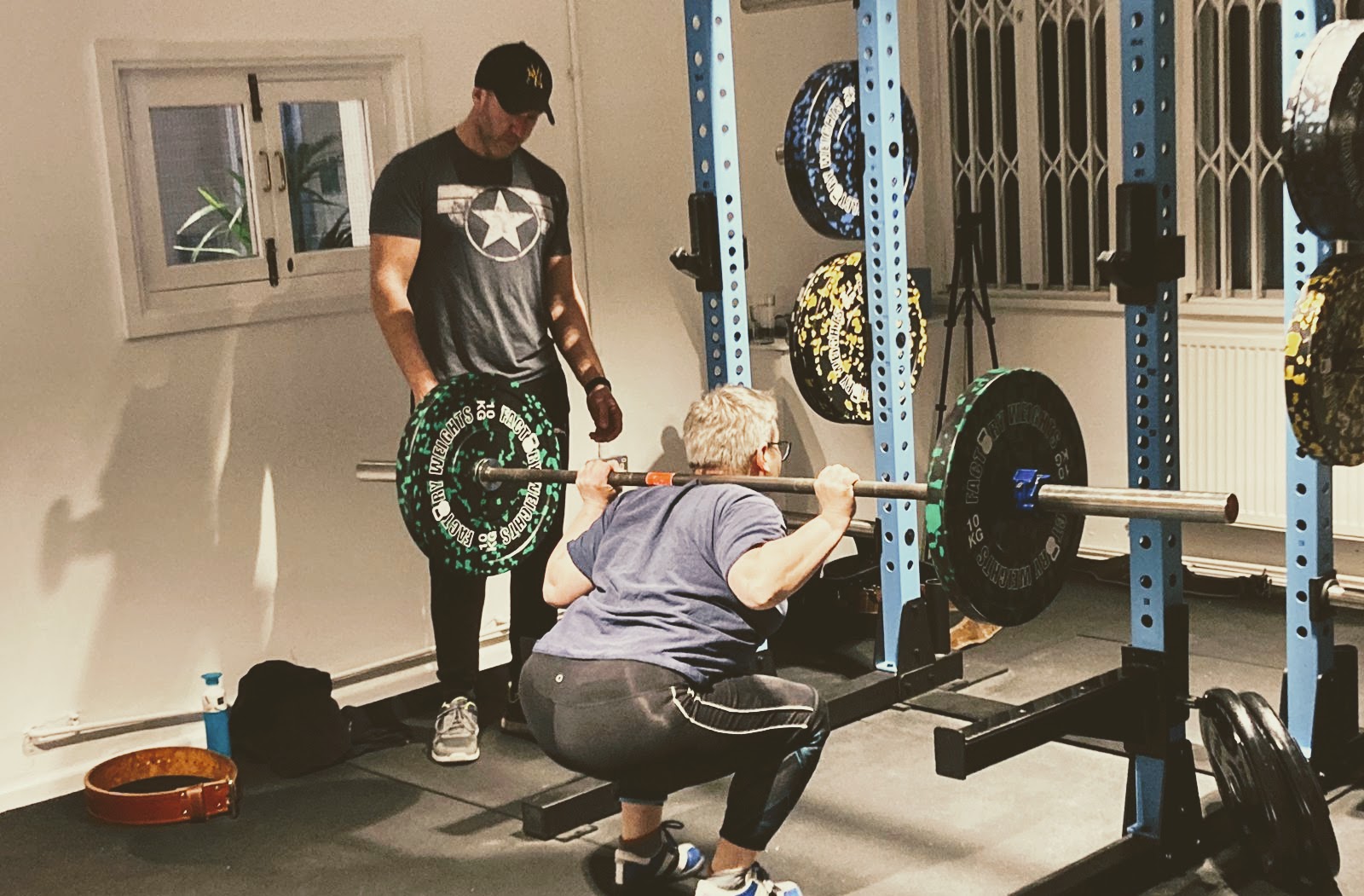
Jacquie has been training with me over 2 years now – there’s rarely been a time where squats haven’t played a role in her training
So how often should you actually change your gym workout?
For most people, there isn’t a fixed answer. Six weeks isn’t automatically better than eight weeks, twelve weeks isn’t too long, and there is no physiological alarm that goes off after three months telling you that your programme has expired.
A better approach is to change something when there is a good reason to change it. Unfortunately, this isn’t a terribly sexy idea, and the coaches that rely on changing your programme every five minutes to show how useful they are wouldn’t make as much money…
Your Body Doesn’t Need to Be Confused
The phrase ‘muscle confusion’ has been around for years (anyone remember P90x?). The basic claim is that regularly exposing the muscles to new exercises stops them adapting and therefore keeps them growing.
That doesn’t really make any sense when you think about it.
When you first start squatting, pressing, rowing or using a leg press, part of the improvement comes from getting better at doing the exercise. Your technique improves. You become more efficient. You learn how hard you can push. You become better at producing force in that particular movement.
If you replace the exercise almost as soon as you have learned it, you lose some of that benefit.
Research into exercise variation broadly supports, unsurprisingly, a middle ground. Basically, variation has some benefits but chopping and changing too often has far more downsides, from increased injury risk to lack of progress.
Repeating Exercises Is Necessary
There is a slightly strange attitude towards repetition in fitness.
Nobody would think it unusual for a tennis player to practise their serve for years, or for a golfer to spend an enormous amount of time refining the same basic movements. Yet repeating a squat or bench press for six months can somehow be portrayed as unimaginative programming.
Repetition gives you something valuable, and that is comparison.
If you leg pressed 120kg for ten repetitions three months ago and you can now do 140kg for ten with equally good technique, something has improved.
If your dumbbell press has gone from 22kg to 28kg, that shows you’re stronger, or better at it, or probably a bit of both.
If you’re squatting the same weight but it feels easier, your movement is better and you can perform more repetitions, that’s useful information too.
Constantly replacing exercises makes those comparisons harder. You can end up spending a lot of time doing different things without having a particularly clear idea whether any of them are improving. You end up comparing apples and oranges and wondering why you have no idea about your progress.
The latest American College of Sports Medicine position stand on resistance training, published in 2026 and drawing on evidence from more than 30,000 participants, makes a fairly simple point: consistency matters enormously, and complicated programming is not automatically better programming.
That probably isn’t as exciting as being given a new programme every month, but it is much closer to how training actually works.
So Should You Ever Change Exercises?
Absolutely.
Keeping exercises forever simply because they are written on an old programme isn’t particularly sensible either.
Sometimes an exercise just doesn’t suit you very well. Perhaps it repeatedly irritates a shoulder, elbow, knee or back despite sensible adjustments. Maybe your gym has bought a machine that you find significantly better than the one you were previously using. Perhaps you’ve become strong enough that loading an exercise has become awkward. Maybe your goals have changed.
There are also situations where variation can give you a broader training effect.
Different exercises place slightly different demands on muscles, even when they appear to train the same general area. Research suggests that using a sensible range of exercises may produce muscle growth across more regions of a muscle than relying on one movement alone.
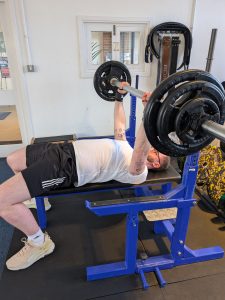
We introduced barbell bench pressing for Tom to give him variety away from solely training for playing football. It’s not always about ‘optimal’.
That doesn’t require creating chaos in your training plan every couple of weeks.
You might keep your squat in your programme but change a secondary leg exercise. You might continue bench pressing while switching from dumbbell shoulder press to a machine press. You could keep a pulldown but change the grip or replace one rowing variation with another.
That is exercise variation with some thought behind it, and those kind of small adjustments whilst keeping the basic movement the same are exactly the kind of minor change in stimulus you want.
What About Boredom?
This matters more than some coaches like to admit, especially newly qualified ones who feel they have to be active and super-useful to justify charging a client.
A physiologically brilliant programme just isn’t especially useful if you hate doing it.
In one study, resistance-trained men either followed a fixed selection of exercises or had their exercises changed randomly from session to session. Both groups made broadly similar improvements in strength and muscle size, while the group receiving more exercise variety reported an improvement in motivation.
That doesn’t mean random workouts are therefore superior. The study was small and lasted eight weeks. It does, however, highlight something obvious: people aren’t spreadsheets, and detailed plans rarely survive first contact with the gym floor.
Some people enjoy trying new equipment and exercises. Others enjoy having exactly the same session and seeing whether they can beat last week’s numbers.
Both are perfectly reasonable, and most people need a mixture of both.
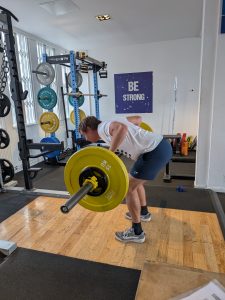
I’ll often bring in dynamic exercises like Pendlay rows when we can – most people enjoy the explosive feeling, even if a slower contraction might be more ‘perfect’ a movement.
If you’re becoming so bored with your training that you’re skipping sessions, doing everything half-heartedly or actively avoiding the gym, changing a few exercises will absolutely do more good than rigidly sticking to the supposedly optimal programme you never bother turning up for.
Enjoyment isn’t irrelevant if it helps you keep training. You don’t have to love the gym, but it’s handy if you don’t hate it.
You Don’t Necessarily Need a Whole New Programme
This is where I think people often go too far.
A workout doesn’t have to be treated as one indivisible unit.
You might have six exercises in a session and five of them are going perfectly well. There is no obvious reason to replace all six because you’ve stopped enjoying one of them.
Change the one that’s holding you back, or you hate, or you just don’t “get”.
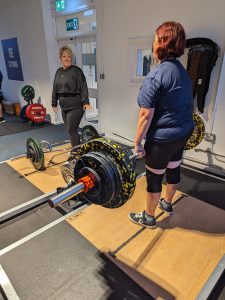
I’ve trained these two for a combined total of 20 years. We’ve switched between conventional and trap bar deadlifts throughout. Movement stays, but the need of ‘changing it up’ still gets satisfied.
Likewise, if you’re progressing well on your main lifts but a couple of accessory exercises have gone stale, keep the productive part of the programme and alter the rest. Over time, a programme can evolve rather than repeatedly being thrown away and started again.
That is often what long-term training actually looks like. Some exercises may remain for years. Others might come and go depending on goals, injuries, equipment, preference or simply what you currently enjoy doing.
What If You’ve Stopped Progressing?
Changing exercises can sometimes help, but it shouldn’t automatically be the first response.
If your bench press hasn’t improved for four weeks, the bench press itself isn’t necessarily the problem.
You might need more training volume. You might need less. Perhaps you’re training it too hard too frequently. You may have been sleeping badly, dieting, unusually busy at work or playing another sport several times per week. You might simply need a little patience.
Strength improvements aren’t perfectly linear. The temptation when progress slows is to change everything at once. New exercises, different rep ranges, more sets and perhaps an entirely new weekly structure.
The problem then is that you don’t know which change, if any, actually helped. Sometimes the sensible response is to make much smaller changes.
How Long Can You Keep the Same Workout?
If the exercises suit you, you enjoy the programme, you’re training consistently and you’re still getting something useful from it, potentially for quite a long time.
Months certainly aren’t a problem. Some exercises can remain part of your training for years.
You don’t have to keep the exact same weight, repetitions and number of sets during that time. Those things can change while the basic exercises remain familiar.
A squat performed for five repetitions is not exactly the same training stimulus as the same squat performed for ten or fifteen. Changing volume, load, effort or frequency can alter the training considerably without requiring a completely new collection of exercises.
There is also reassuring evidence that resistance training works across a surprisingly broad range of setups. Many studies involving thousands of participants have found that all manner of different combinations of training load, sets and frequency have produced improvements in strength and muscle growth.
There are certainly ways of making training more specific to a particular goal, but there isn’t one narrow programme format that suddenly stops working when you’ve completed a certain number of weeks.
A Simple Rule
Keep the things that are working, and change the things that aren’t.
Occasionally change something simply because you fancy doing something different. That’s a perfectly legitimate reason.
What probably isn’t necessary is changing your entire gym workout every four, six or eight weeks because somebody told you that your muscles have become accustomed to it. Getting accustomed to an exercise can be useful. It allows you to become good at it, train it harder, measure it accurately and gradually improve what you’re capable of doing.
Variation has a place in good training, but repetition is far more important.
Knowing when to use each is far more useful than constantly searching for the next new workout.
At Real World Fitness in Nottingham, plenty of our members have exercises that remain in their training for a very long time. Others change more regularly because their goals, other sports or simply their preferences change.
The workout needs to keep doing something useful for you. The old adage of “if it ain’t broke, don’t fix it” is very, very applicable to training.
Book your free Personal Training session today
If you’re in Nottingham and thinking about working with a personal trainer, this is the perfect opportunity to see what professional coaching can do.
Book your FREE personal training session and discover how expert guidance, a structured plan and genuine accountability can help you build strength, improve your fitness and achieve lasting results.
There’s no pressure and no hard sell. Just the opportunity to experience personal training for yourself, ask questions and see how we work.
After one session, you’ll know whether we’re the right gym, the right coach and the right approach for you.
Sign up to the RWF newsletter

