

How fast should I make progress in the gym?
What should I be lifting? What does progress in the gym look like?
When should I put the weight up? And by how much?
You know what? These are decent questions. They’re things that people who’ve been training a while can tend to do naturally, and don’t really think about any more. But, when you’re new, or new-ish, it can seem daunting to increase your lifts.
So, the non-glamourous answer is… there’s no ONE answer.

Upping the weight is essential for progress. But when? And by how much?
Understanding progress in the gym and expectations
Progress in the gym depends on a lot of moving parts — your training frequency, recovery, nutrition, sleep, and how consistent you are. Beginners often see fast improvements at first because their body and nervous system are adapting quickly. That early stage, often called “newbie gains,” can last anywhere from a few weeks to six months. After that, progress slows naturally, and it’s easy to assume you’re doing something wrong when, in reality, you’ve just entered a normal training phase.
A good way to look at progress is through rate of perceived exertion (RPE) and training volume rather than just the numbers on the bar. If you’re moving the same weight for more reps or with better form, that’s progress.
A common issue is lifters “only” making progress in the gym by 2.5 kg a week on big lifts. And, I get it. It doesn’t seem much to go from just lifting the bar (20 kg) to lifting 25 kg. The numbers seem, well, small. But here’s the thing: the number might be small, but the percentage increase isn’t. It’s a 25 % jump. Tell me you wouldn’t notice that in your pay packet… ! So yes, small jumps in NUMBER might be big jumps in reality.
Let’s extrapolate that. Imagine you “only” add 2.5 kg every month, and you’ve started with just an empty 20 kg bar (and that’s a perfectly normal starting point for new lifters, especially female lifters). That would mean a 50 kg lift by the end of the year. 100 kg after two years. Given that many, many male lifters never end up benching or squatting 100 kg, and many don’t get much further on a deadlift, and we start to see that small, consistent additions make a huge difference. In fact, the chances are you WON’T be able to add 2.5 kg every month for very long beyond your honeymoon stage of lifting.
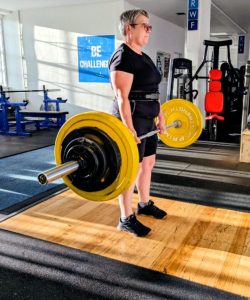
You can’t expect to add kilos every single week – but a kilo here and there over months adds up to big weights eventually
Beginner, intermediate and advanced progress in the gym expectations
To make sense of it, here’s a rough guide for realistic weekly or monthly progress on the main barbell lifts:
| Lifter Level | Expected Progress | Example (Squat) | Notes |
|---|---|---|---|
| Beginner (0-6 months) | 2–5 kg per week | 40 → 70 kg in 3 months | Neural adaptation phase — fastest progress |
| Intermediate (6-24 months) | 2.5 kg every 2–4 weeks | 70 → 100 kg in a year | Progress slows; recovery and nutrition matter |
| Advanced (2 + years) | 1–2 kg every 4–6 weeks | 100 → 110 kg+ over many months | Plateaus normal; focus on microloading and periodisation |
These aren’t hard rules, but they show why patience and consistency beat big jumps every time.
The longer you’ve been lifting, the harder it is to add any weight at all to your top lifts.
In terms of “good” lifts – what should you be aiming at?
Well, let’s assume you’re healthy, injury-free and are prepared to put some effort in three times a week for a couple of years. There’s absolutely no reason you shouldn’t be able to lift your bodyweight equivalent for a bench press, around 1.5× your bodyweight for a squat, and 2× your bodyweight for a deadlift (don’t worry if you’re starting your journey with a little extra weight to lose – if your training is done properly, you should be significantly lighter by the time you get to those timescales, so what you weigh at that point should be much lower than where you are now).
I’ll go out on a limb a little and say that those lifts should be attainable even if strength isn’t your over-riding goal – it’s just a by-product of properly organised training and a good level of commitment.
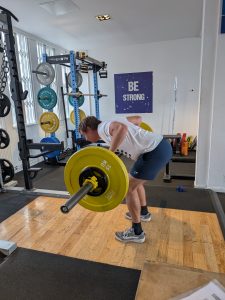
Small increments – even on big lifts – add up quicker than you think
Factors that slow progress in the gym
If you hit a wall, it’s rarely random. Some of the main culprits:
-
Inconsistent training frequency – missing sessions disrupts overload.
-
Poor recovery or lack of sleep – your strength improves when you rest, not just train.
-
Low protein intake or poor overall diet – muscles can’t adapt without fuel.
-
Stress and poor lifestyle habits – cortisol can blunt progress if you’re always run-down.
-
Technique drift – sloppy form leads to plateaus or injury risk before you realise it.
Fixing these before chasing more weight usually restarts progress.
So, next time you’re beating yourself up about lack of progress remember: small, consistent increases eventually create BIG numbers. Jumping up by big numbers to try and get there quicker (a) doesn’t work and (b) almost always gets you injured.
Keeping a proper training log is a massive part of being able to spot progress in the gym that otherwise might seem inconsequential. We recommend something like this logbook to help you keep track.
How to track and review progress
Whether you use a notebook, spreadsheet, or app, track:
-
Exercise, weight, reps, and sets
-
RPE (how hard it felt)
-
Sleep quality and session notes
Reviewing your log weekly helps you spot subtle improvements — more reps, smoother bar speed, or higher training volume at the same weight all count as progress.
If you plateau, try small load increases using microplates (0.25–0.5 kg), or shift focus to rep goals rather than load for a few weeks.
If you want more quality advice and some help structuring your training, get in touch here. We’d love to help!

FAQs
How long does it take to see results from the gym?
Most beginners notice visible changes in 6–8 weeks and strength improvements within the first month. The early phase is mostly your nervous system learning to recruit muscles efficiently.
Why am I not getting stronger even though I train regularly?
Check recovery, nutrition, and sleep first. You might also be using weights that are too light to trigger adaptation or repeating the same rep ranges without variation.
Should I increase weight every session?
At the start, you might be able to. After a few months, progress slows — use weekly or bi-weekly jumps and focus on good form instead of chasing numbers.
What’s more important: adding weight or improving form?
Form always comes first. Quality movement allows long-term progress and keeps you injury-free so you can train consistently.
Need help breaking plateaus or setting realistic targets?
Our coaches at Real World Fitness Nottingham specialise in structured, evidence-based strength training that suits your ability and lifestyle. Book a free consultation or come in for a trial session — and start making progress that actually lasts.
Book a free Personal Training session today
If you’re in Colwick, Netherfield, West Bridgford, or anywhere else in Nottingham and you’re considering personal training, now’s your chance!
Book your FREE personal training session today and turn your fitness dreams and transformation goals into an achievable reality.
Don’t just take our word for it; feel the difference in guidance, expertise, and motivation. Nottingham residents, your journey to the best version of yourself starts with just one session.

