
Returning to Exercise After Illness: How to Rebuild Strength Safely
There are certain conversations I’ve had hundreds of times over the years, and one of the most common starts with a client saying a variation of “I just don’t know where to begin again.”
Sometimes they’ve been knocked sideways by a chest infection that lingered for weeks. Sometimes they’re recovering from surgery. Sometimes they’ve completed cancer treatment or are learning to live with a long-term health condition. The circumstances are always different, but the feeling is remarkably similar. They’ve lost confidence in their body.
People often tell me they’re worried about how much strength they’ve lost, but after talking for a few minutes it usually becomes clear that strength isn’t the real concern. What they’re actually asking is whether they’ll ever feel like themselves again.
I understand that feeling better than most.
When I was 29, I was diagnosed with testicular cancer. Chemotherapy and surgery saved my life, but afterwards I found myself asking many of the same questions my clients ask today. How much should I do? How hard should I push? Was it normal to feel this tired? Would I ever get back to where I was before?
That experience changed the way I look at exercise. It also formulated the way I coach people returning after illness.
One thing I’ve learnt is that getting back into exercise isn’t really about chasing your old level of fitness. It’s about rebuilding trust in your own body, one session at a time.
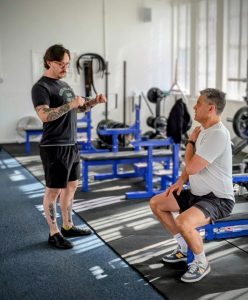
Coming back from injury takes time and guidance – and patience!
Recovery can only start where it starts!
One of the biggest mistakes people make is comparing themselves with the version of themselves that existed before they became ill.
It’s understandable. If you were playing tennis twice a week, walking ten miles at the weekend or training regularly in the gym, that’s naturally where your mind goes. Then illness arrives and suddenly even a short walk leaves you feeling tired, and that gap can feel dauntingly enormous.
The problem is that your body doesn’t know where it was three months ago. It only knows where it is today. There’s no point getting angry that you can’t do what you could – it’s like shouting at the sky to stop raining.
I’ve found that the people who recover best are usually the ones who stop looking backwards. Instead of asking, “Why can’t I do what I used to?” they begin asking, “What can I actually do right now?”
That change in mindset makes a remarkable difference because recovery becomes something you’re actively doing rather than some abstract concept you’re hoping for.
❝
Christine first came to me after becoming a World Champion in her age group and weight class for kettlebell lifting. At first glance, her story has nothing to do with illness, but the lesson is exactly the same. She recognised that the training which had helped her achieve one goal wasn’t necessarily the training that would serve her best over the next twenty years. Together we shifted the focus towards building muscle, maintaining strength and investing in long-term health rather than short-term performance.
❞
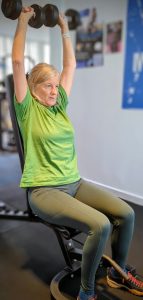
Personal Training client Caroline strengthening her shoulders after an injury
You don’t have anything to prove
One thing that always strikes me is how many people apologise when they come back after time away.
They apologise for being weaker. They apologise for getting out of breath. Some even apologise because they can’t remember how to use a particular piece of equipment. There’s absolutely no need.
If your body has been through illness, surgery or medical treatment, the fact you’re walking back into a gym is already a positive step. Nobody expects you to pick up where you left off, least of all a decent personal trainer.
In fact, I often tell people that the first session isn’t really about training. It’s about gathering information. We want to see how your body responds, how you recover afterwards and how confident you feel moving again.
The irony is that the people who leave saying, “I probably could have done a little more,” usually make the best progress. They come back two days later feeling good, train again and gradually build momentum. The people who try to make up for weeks or months away in a single session often end up needing another week to recover.
Exercise shouldn’t set your recovery back. It should move it forwards.
Progress isn’t always blindingly obvious
One of the frustrating things about recovering from illness is that it rarely happens in a straight line.
You’ll have days where you feel brilliant and begin to think you’ve turned a corner. Then, without any obvious reason, you’ll wake up feeling tired again.
I’ve lost count of the number of times a client has arrived apologising because they’re having an ‘off day’. A month later, when we look back at where they started, it’s obvious how much progress they’ve made. They simply couldn’t see it because they were judging themselves one day at a time.
I always encourage people to think in weeks rather than days.
If you can do a little more this month than you could last month, you’re moving in the right direction.
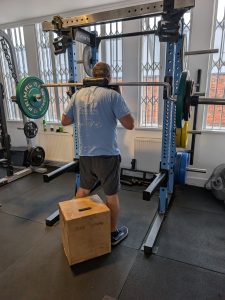
Stephen squatting again after a serious fall left him requiring surgery in both knees – and a year-long rehab programme
Strength changes far more than your muscles
People often associate strength training with bigger muscles or heavier weights.
Those things can happen, but they’re rarely what clients talk about.
Instead, they’ll tell me they carried all the shopping in one trip. They’ll mention that they’ve stopped using the handrail on the stairs, or that they spent the afternoon with their grandchildren without needing to sit down every ten minutes.
Those are the conversations I enjoy most because they remind me why strength training matters.
The gym is simply where we try and build everything, but for most people, the random everyday situations are where the benefits appear.
❝
One client came to see me because everyday life had quietly become harder. Standing up from the sofa, carrying shopping and keeping active all seemed to require more effort than they once had. We didn’t do anything revolutionary. We simply rebuilt strength gradually and consistently. A few months later our conversations had completely changed. We weren’t talking about exercises anymore. We were talking about holidays, gardening and all the things that had become enjoyable again because everyday movement no longer felt like hard work.
❞
Recovery means different things to different people
Over the years I’ve worked with people returning after cancer treatment, hip and knee replacements, heart procedures and a wide range of long-term medical conditions.
What’s interesting is that very few of them arrive with ambitious gym goals. Most simply want their lives back.
They want enough energy to enjoy a family day out. They want to get back on the golf course, walk the dog, travel, play with grandchildren or return to work without feeling exhausted.
Those goals might not make exciting social media posts, but they’re the ones that genuinely change people’s quality of life.
That’s why we believe exercise should always fit around someone’s life rather than the other way round.
❝
After his hip replacement, J wasn’t interested in setting personal bests or lifting impressive weights. His priority was getting back to walking comfortably and enjoying the outdoors again. We rebuilt his strength steadily, restored confidence in his new hip and focused on what mattered most to him. That’s something I see time and time again. Success usually isn’t defined by what happens inside the gym, but more by what people can enjoy as a result of it.
❞
Be patient with yourself
Modern life encourages us to expect quick results, but training and recovery rarely works like that.
Some weeks you’ll make noticeable progress. Other weeks it will feel as though nothing much has changed. That doesn’t mean your body isn’t adapting. It simply means recovery has a very unpredictable (and often confusing) timetable that you can’t really force.
One thing I’ve learnt from both my own experience and from coaching hundreds of clients is that consistency almost always beats intensity.
You don’t need to have the perfect programme. You don’t need to train at maximum effort. You certainly don’t need to make up for lost time – that usually lead to injury and setbacks that will kill your motivation.
You simply need to keep turning up, doing what you’re capable of that day and allowing those small improvements to accumulate. Before long, the things that once felt difficult begin to feel normal again.
How Real World Fitness can help
Returning to exercise after illness can feel intimidating, but it doesn’t have to.
At Real World Fitness we’ve helped people rebuild confidence after everything from a couple of weeks away with illness to major surgery, cancer treatment and long-term health conditions. Every programme starts with a sit-down conversation because every recovery is different.
We’ll take the time to understand what you’ve been through, what you’re hoping to achieve and how your body is feeling today. From there, we’ll build a programme that progresses at the right pace for you, helping you regain confidence as well as strength.
If you’re in Nottingham and wondering whether you’re ready to start exercising again, we’d be happy to help.
Book a free personal training session, experience how we work and ask as many questions as you like. After one session, you’ll know whether we’re the right gym, the right coach and the right approach for your recovery.
Based in Nottingham, Real World Fitness offers a calm, friendly environment with expert personal training and a gym designed for people who want long-term results rather than quick fixes.
If you’d like to see what we’re about, get in touch or arrange a free 7-day trial.
Book your free Personal Training session today
If you’re in Nottingham and thinking about working with a personal trainer, this is the perfect opportunity to see what professional coaching can do.
Book your FREE personal training session and discover how expert guidance, a structured plan and genuine accountability can help you build strength, improve your fitness and achieve lasting results.
There’s no pressure and no hard sell. Just the opportunity to experience personal training for yourself, ask questions and see how we work.
After one session, you’ll know whether we’re the right gym, the right coach and the right approach for you.
Sign up to the RWF newsletter

