
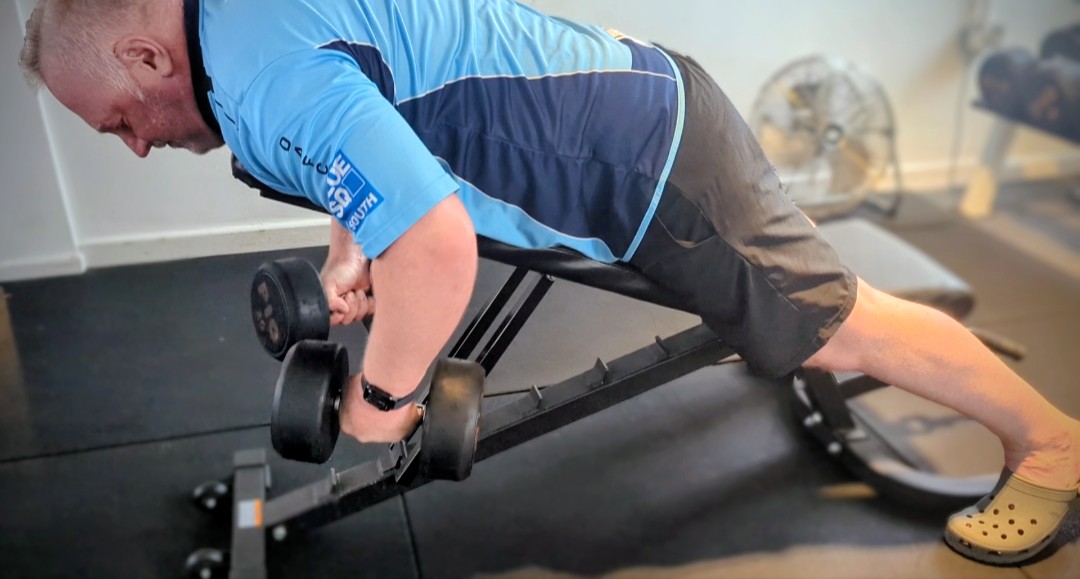
Sarcopenia: Age-Related Muscle Loss and How Strength Training Can Help
Most people have never heard the word sarcopenia.
That isn’t surprising. It sounds like a medical condition, yet it’s something that affects almost all of us to some degree as we get older. In simple terms, sarcopenia is the gradual loss of muscle mass, strength and function that occurs with age.
The important thing to understand is that getting older doesn’t automatically mean becoming weak. While some muscle loss is a natural part of ageing, much of it can be slowed, reduced and, in many cases, partially reversed through the right lifestyle choices.
At Real World Fitness, we’ve spent over two decades helping people become stronger, more confident and more capable. We see first-hand, daily, that it’s never too late to improve your strength and quality of life.
Personal Training client Caroline strengthening her shoulders at RWF Gym Nottingham
What is sarcopenia?
Sarcopenia is the age-related decline in muscle mass and strength. It develops gradually over many years, which means many people don’t notice it until everyday tasks start becoming harder.
You may find yourself struggling to carry heavy shopping, climb stairs without effort, get up from the floor, or simply feel less steady on your feet.
Many people assume these changes are just ‘old age’. In reality, they are often the result of losing muscle that could have been maintained with appropriate exercise and nutrition.
When does muscle loss begin?
One of the biggest misconceptions is that muscle loss only begins after retirement.
In reality, most people begin losing small amounts of muscle from their thirties onwards. The rate of loss often accelerates after the age of fifty, particularly if activity levels decrease.
A sedentary lifestyle, prolonged illness, poor nutrition and insufficient protein intake can all speed up the process.
The good news is that muscle responds remarkably well, and remarkably quickly, to training throughout life.
RWF PT Christine helping an older client learn to walk again
Why does muscle matter?
Many people associate muscle with athletic performance or appearance.
In reality, as you get older muscle is about something far more valuable: independence.
Strong muscles help you:
- Carry shopping comfortably.
- Climb stairs with confidence.
- Get up from a chair easily.
- Lift grandchildren safely.
- Maintain good balance.
- Reduce the risk of falls.
- Recover more effectively after illness or surgery.
- Continue enjoying hobbies and sports.
- Remain independent for longer.
These benefits become increasingly valuable as we age.
Signs and symptoms of sarcopenia
Because sarcopenia develops slowly, many people don’t recognise it.
Some common signs include:
- Feeling weaker than you used to.
- Finding stairs more difficult.
- Reduced balance.
- Walking more slowly.
- Difficulty carrying everyday objects.
- Feeling less stable.
- Recovering more slowly from physical activity.
- Losing confidence in physical tasks.
None of these automatically mean you are suffering the worst effects of sarcopenia, but they are worth discussing with a healthcare professional if they become noticeable. The best news is we can absolutely help you!
Can sarcopenia be prevented?
While ageing itself cannot be stopped, there is strong evidence that lifestyle has a significant influence on how much muscle we retain.
Three areas make the biggest difference.
1. Strength training
Resistance training is by far the most effective way of maintaining and building muscle as we age.
You do not need to become a bodybuilder (and as you age, it’s not exactly that easy to do anyway!)
A well-designed programme performed two or three times each week can improve strength, muscle mass, balance and confidence.
Exercises such as squats, presses, rows, lifting from the floor variations and loaded carries help train movements that transfer directly into everyday life.
2. Eating enough protein
Muscle needs protein to repair and grow.
Many older adults simply don’t consume enough.
Including a good source of protein with each meal can help support muscle maintenance alongside regular strength training.
3. Staying active
Not every activity has to happen in the gym, but almost ever activity can be improved or made easier by some targeted gym work.
Walking, gardening, swimming, cycling and simply moving regularly throughout the day all contribute towards maintaining health.
Strength training provides the stimulus to maintain muscle, while an active lifestyle supports overall wellbeing.
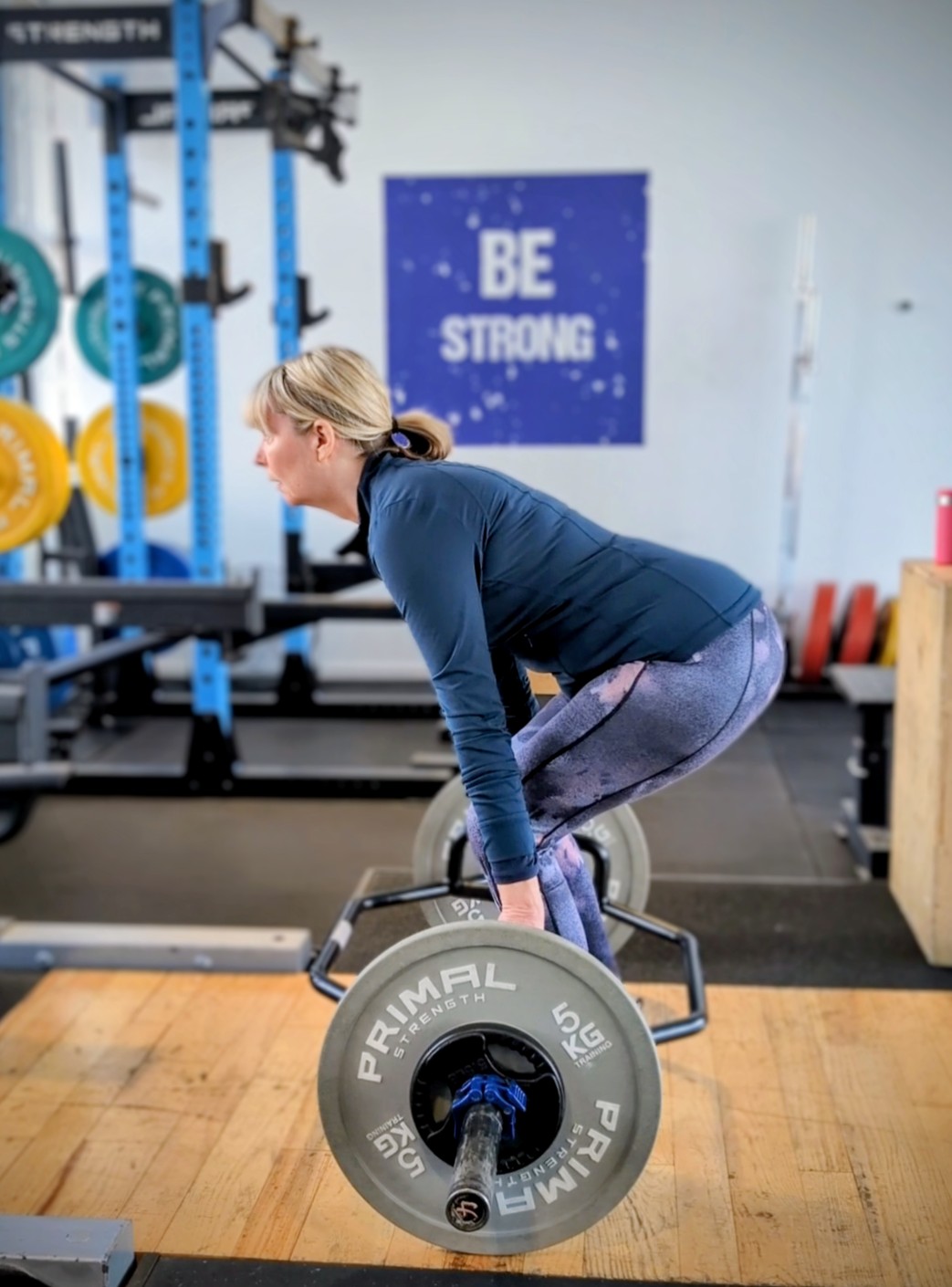
RWF Personal Training Client Brom performing a perfect trap bar deadlift
Is it too late to start?
Absolutely not. So many of our clients didn’t touch the gym until they hit 50,60 or even 70.
One of the most encouraging things about strength training is that improvements can occur at almost any age.
Research has consistently shown that even people in their seventies, eighties and beyond can become significantly stronger when following an appropriate resistance training programme.
You may not become as strong as you were at twenty-five, but becoming noticeably stronger than you are today is a realistic goal for many people, and certainly stronger than your non-training peer group.
Common myths about muscle loss
“I’m too old to lift weights”
Age alone is not a barrier to strength training. In fact, many older adults benefit more from resistance training than younger people.
“I’ll get injured”
When exercises are selected appropriately and progressed sensibly, strength training is one of the safest and most effective forms of exercise – and will make you less likely to get injured outside of the gym.
“Walking is enough”
Walking is excellent for general health, but it does not provide enough resistance to maintain muscle mass on its own. It’ll help your mental well-being, and your cardiovascular system, but it won’t prevent muscle loss.
“Women will become bulky”
Building large amounts of muscle is difficult at any age. Most women who strength train become stronger, healthier and more confident rather than noticeably muscular; and older women are even less likely to add visible muscle. Becoming too bulky is the least likely thing that could happen!
“I need expensive supplements”
Supplements can occasionally be useful, but they are never a substitute for regular strength training, sensible nutrition and consistency. We hardly ever recommend anything beyond a protein shake and a decent multivitamin.
When should you seek professional guidance?
If you have arthritis, osteoporosis, have recently undergone surgery, have concerns about balance, or simply feel unsure where to begin, working with an experienced coach can help you train safely and confidently.
A good personal trainer doesn’t just show you exercises. We help you develop the confidence, technique and consistency needed to make strength training a long-term habit.
The bottom line?
We cannot stop the ageing process.
What we can influence is how well we age.
Maintaining muscle is one of the most valuable investments you can make in your future health. It isn’t just about looking better. It’s about preserving your independence, reducing your risk of falls, continuing to enjoy the activities you love and remaining capable for as long as possible.
Frequently Asked Questions
What is sarcopenia?
Sarcopenia is the gradual loss of muscle mass, strength and physical function that occurs with ageing.
At what age does sarcopenia start?
Small amounts of muscle loss can begin from your thirties, although the rate often increases after the age of fifty.
Can sarcopenia be reversed?
Many people can improve muscle strength and regain muscle through regular resistance training, adequate protein intake and an active lifestyle.
Is walking enough to prevent muscle loss?
Walking has many health benefits, but it does not usually provide enough resistance to preserve muscle mass on its own.
How often should older adults strength train?
Most people benefit from strength training at least two times per week, although programmes should always be tailored to the individual.
Can women develop sarcopenia?
Yes. Sarcopenia affects both men and women.
Is sarcopenia the same as frailty?
No. Sarcopenia refers specifically to age-related muscle loss, while frailty is a broader condition involving reduced physical resilience. However, the two are closely related, and both can be helped with intelligent training.
Does protein really matter?
Yes. Protein provides the building blocks your muscles need to repair and maintain themselves, particularly when combined with strength training.
Is strength training safe if I’m over 60?
For most people, yes. When exercises are selected appropriately and progressed sensibly, resistance training is considered both safe and highly beneficial for over 60s
Can a personal trainer help?
If you’re unsure where to begin, have existing medical conditions or simply want reassurance that you’re exercising correctly, working with an experienced personal trainer can make starting much easier and significantly improve your confidence.
If you’ve spent years avoiding the gym because you think you’re too old, too stiff or too out of shape, you’re exactly the sort of person we work with every day.
Based in Nottingham, Real World Fitness offers a calm, friendly environment with expert personal training and a gym designed for people who want long-term results rather than quick fixes.
If you’d like to see what we’re about, get in touch or arrange a free 7-day trial.
Book a free personal session today
If you’re in Colwick, Netherfield, West Bridgford, or anywhere else in Nottingham and you’re considering personal training, now’s your chance!
Book your FREE personal training session today and turn your fitness dreams and transformation goals into an achievable reality.
Don’t just take our word for it; feel the difference in guidance, expertise, and motivation. Nottingham residents, your journey to the best version of yourself starts with just one session.
Sign up to the RWF newsletter

