
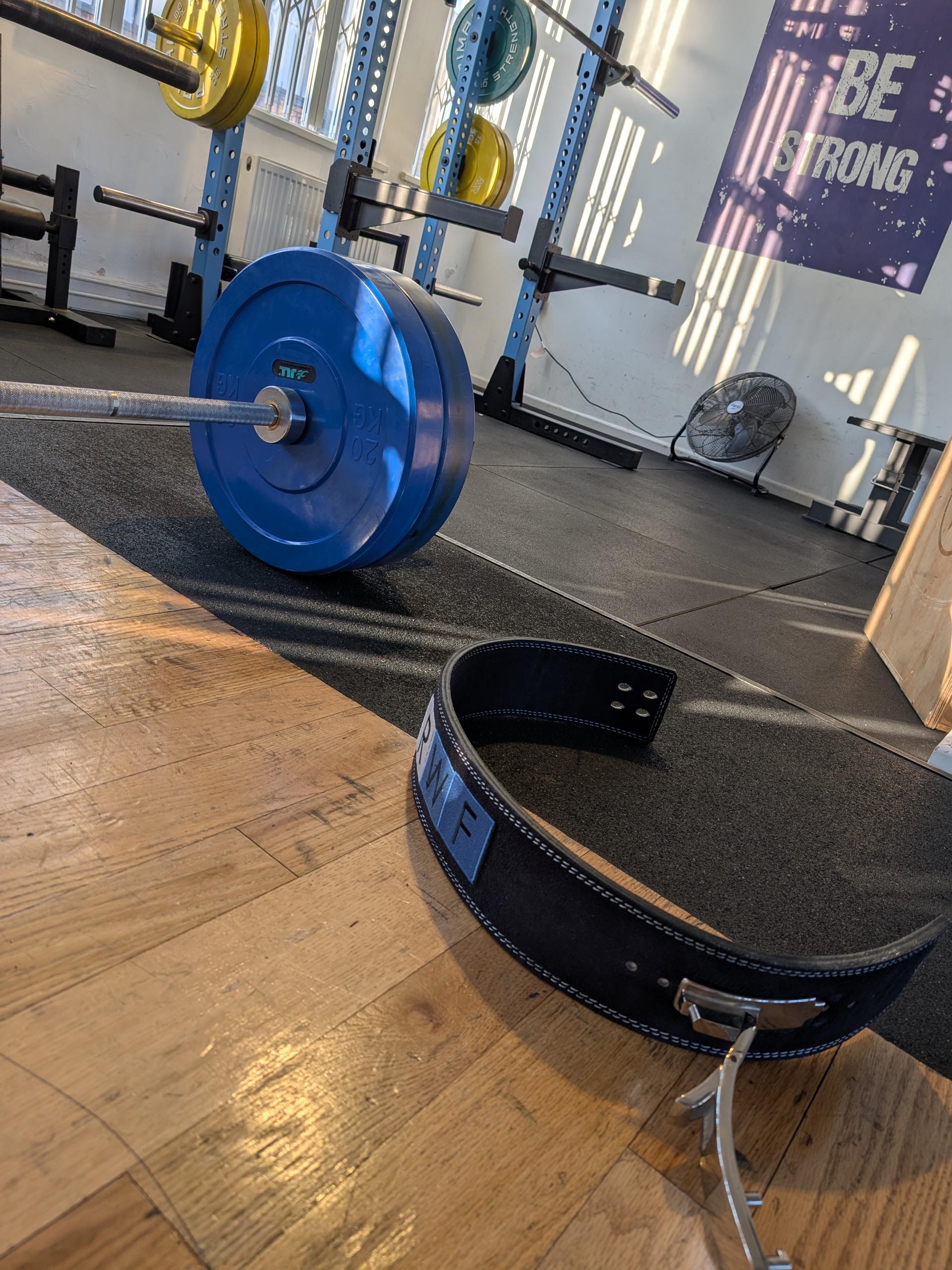
Psychology vs Biology in Training
The programme you believe in, you can commit to, and you have the skills to complete properly, will always beat the programme that is *theoretically* perfect. Here’s Real World Fitness’s explanation of why…
The fitness industry has always had a fascination with optimisation, which is a shame for an industry that really should be talking about getting started, rather than being perfect.
Every year there are new (and age-old) debates about ideal training splits, optimal volume ranges, perfect rep schemes, and the precise frequency with which muscles should be trained. If you read enough of it you could easily come away believing that results depend on getting every variable exactly right; and giving up before you even start.
From a purely biological perspective the arguments all make sense. The human body responds to training stress in predictable ways. Muscles grow when they are exposed to sufficient mechanical tension and fatigue. Strength increases when the nervous system repeatedly practises producing force against resistance. Recovery allows those adaptations to occur. This is all pretty obvious and basic stuff.
Those principles are not controversial. They are well established, overwhelmingly science backed and broadly understood.
What tends to get lost in these conversations is that training does not take place inside laboratory conditions. It takes place inside real lives, and real lives rarely have consistency for long.
People train around changing work schedules, family commitments, sleep patterns, stress levels, motivation, confidence and habit. They train when they are tired, when they are busy, when they are distracted, and sometimes when they are not particularly enthusiastic about being there in the first place.
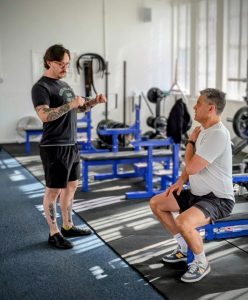
We have many clients with busy, stressful lives – proper training shouldn’t add to that stress
The moment you step out of a controlled environment and into the real world, psychology becomes just as important as biology. In many cases it becomes more important, because whilst our physiology determines what can work, your psychology, or mindset, determines what actually will.
There’s a big just-stick-to-it problem most programmes ignore
A typical Internet, or inexperienced personal trainers, programme is designed with the assumption that it will be followed exactly as written. Four sessions per week means four sessions per week. Rest periods are precisely timed. Exercises are performed in the correct order and the prescribed effort level is maintained throughout.
On paper this looks sensible, but in practice it collapses very, very quickly.
The reality is that most people struggle to maintain rigid structures over long, or even medium, periods of time, despite their best initial intentions. Life interferes, motivation fluctuates, work becomes busy, kids get ill, sleep varies, social lives ebb and flow, and energy levels can inexplicably dip.
When those things happen, adherence to turning up becomes the decisive factor.
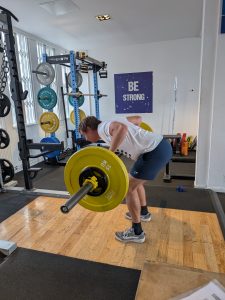
Busy people with families and business commitments need certainty and clarity, not endless changes
A technically perfect programme that someone follows inconsistently will produce worse results than a simpler programme that they follow reliably for years. This is the most important thing that any personal trainer should get across to a client from Day One.
The body responds extremely well to repeated stress over time. What it does not respond to particularly well is irregular bursts of effort separated by long periods of inactivity.
This is why many people move from one training plan to another without ever seeing meaningful progress. The problem is rarely the programme itself. It is the lack of consistency required for any programme to work.
Why effort matters more than precision
Another element that is often underestimated is old-fashioned, boring, effort.
Two people can follow exactly the same training plan and experience very different outcomes. One progresses steadily. The other feels as though nothing is happening. At first glance it might appear that genetics are responsible, but in most cases the difference is far simpler.
The difference is intent and effort.
One person approaches each session with purpose. They focus on the work, push their sets properly, and gradually increase the demands placed on their body. The other person goes through the motions. The weights move, the exercises are completed, but the effort never quite reaches the level required to stimulate meaningful adaptation.

Proper effort, and giving a gym programme everything because you understand why AND how, is key
A programme is only a framework. It provides structure, but the results come from what happens inside that structure.
This is where psychology begins to become more important. When someone trusts the programme they are following, they train differently. They apply themselves more fully and they are more willing to tolerate the discomfort that hard training inevitably brings.
Without that belief the programme becomes little more than a set of instructions that most people will half-arse.
Identity and training behaviour
There is another psychological element that plays an important role in long term training success, and that is identity.
People tend to maintain behaviours that align with how they see themselves. Someone who thinks of themselves as a person who trains regularly behaves differently from someone who views exercise as an obligation that they never quite feel comfortable with.
When training becomes part of someone’s identity it stops requiring constant motivation. It simply becomes something they do, in the same way that other routine behaviours become embedded over time.
The challenge for many beginners is that they have not yet developed that identity. Training still feels foreign and uncertain. They are often surrounded by conflicting advice and constantly exposed to new methods that promise better results.
This creates a tendency to jump from one programme to another in search of the perfect approach.
Ironically, that constant searching prevents progress from occurring. The body requires repeated exposure to a consistent stimulus before adaptation takes place. Changing direction every few weeks interrupts that process.
Progress in training is rarely the result of finding the perfect method. It is far more often the result of committing to a sensible method and repeating it consistently.
This is one of the reasons personal training can be so effective.
At first glance it might seem that the main value of a personal trainer lies in writing better programmes. In reality the programme itself is rarely the most important part of the relationship.

Trusting the plan means you commit harder; and that means you’ll see more physical benefits. Your mindset matters!
A good personal trainer provides structure, accountability and clarity. They remove the constant second guessing that tends to derail progress. When someone trusts that the process is sensible and appropriate for them, they can focus their attention on the work rather than on questioning the plan.
That shift in mindset changes how people train.
Instead of wondering whether they should be doing something else, they commit to the plan – especially if it’s been constructed WITH them, rather than just presented to them. Over time that consistency builds momentum, and once momentum appears the biological adaptations begin to follow.
None of this is because the programme is perfect, but because it is being applied consistently and with intent.
What this means for beginners to the gym
For people who are new to training, this perspective can be surprisingly reassuring.
The fitness world often makes it appear as though progress depends on understanding complex programming principles and constantly adjusting variables. In reality the fundamentals are much simpler.
A small number of well chosen exercises performed regularly and with gradually increasing effort will produce meaningful results for the vast majority of people.
The difficult part is not discovering the perfect training structure. The difficult part is building the habits and confidence required to repeat those sessions week after week.
Once that consistency exists, the basics of biology take care of the rest.
The real definition of a perfect programme
If there is such a thing as a perfect training programme, it is probably not the one that looks most impressive on paper.
It is the one that fits comfortably within someone’s life, and the one that they believe in enough to stop searching for alternatives, and the one that they show up for even when motivation is low.
It does not have to be complicated. It simply has to be repeated.
Biology determines how the body adapts to training stress. Psychology determines whether that stress is applied often enough for the adaptation to occur.
Training in the real world
At Real World Fitness the focus is deliberately simple.
Our training is designed to fit the person doing it rather than forcing people to fit an abstract programme. Sessions are structured so that they can be repeated consistently and performed with genuine effort. It’s highly unlikely any two clients are following the same plan at the same time.
When people enjoy their training, trust the process and feel confident in what they are doing, they work harder without needing to be persuaded. Over time that consistent effort produces the results most people are looking for.
Starting Personal Training at Real World Fitness
For many people the hardest part of training is not effort, it is making sure they know what they are doing, and why.
When you are new to the gym it can be difficult to know whether you are doing the right things. There is an endless supply of conflicting advice online, programmes that promise quick results, and training methods that appear convincing but rarely explain who they are actually designed for.
Throw in looking around the gym at almost everyone doing almost everything wrong, and you’ve got a recipe for disaster.
That uncertainty often leads to hesitation. People start training, lose confidence in what they are doing, and then begin searching for something else before the original plan has had time to work.
This is where good coaching makes a difference.
At Real World Fitness the goal is not to overwhelm people with complicated programming. The aim is to create a training structure that makes sense for the person in front of us and can be repeated consistently.
The process usually begins with a simple conversation about your current training, your goals, and how training realistically fits into your week. From there we build a programme that is straightforward, progressive, and designed to develop confidence as well as strength.
For some people that means one or two coached sessions each week while they build the habit of training. For others it means learning the basics of strength training properly so they can continue training independently with a clear plan.
Over time the aim is always the same. Training should become something you understand and trust rather than something you constantly question.
If you are interested in starting personal training or simply want some guidance on how to approach your training more effectively, you can find more information here
Or get in touch and we can arrange a time to talk through your goals and see whether coaching would be useful for you.






Frequently Asked Questions
Why do most gym programmes fail?
Most gym programmes do not fail because they are badly written. They fail because they do not fit real life. If a plan is too rigid, too complicated, or unrealistic around someone’s schedule, people drift away from it before it has had time to work. Long-term progress in the gym almost always comes from consistent training habits rather than short bursts of effort.
Is consistency more important than the perfect workout plan?
In most cases, yes. The human body responds well to repeated effort over time. A simple programme followed properly for months will almost always produce better results than a theoretically perfect programme that is only followed occasionally. Progress in strength and fitness tends to be cumulative, which is why regular attendance matters so much.
Why does personal training help people stay consistent?
Personal training removes a lot of the uncertainty that stops people progressing. Instead of constantly wondering whether they are doing the right exercises or following the right plan, they have clear guidance and accountability. That clarity allows people to focus on the work itself, which makes it far easier to build momentum and stay consistent over time.
How do I start personal training at Real World Fitness?
Starting personal training at Real World Fitness usually begins with a simple conversation about your goals, your current training, and how exercise realistically fits into your week. From there, a straightforward programme is built around you. The aim is not to create something complicated, but something you understand, trust, and can repeat consistently.
Why do people struggle to stick to a training programme?
Most people do not struggle because the programme is physically impossible. They struggle because the plan does not fit their life, their schedule, or their mindset. When training feels overly complicated, time consuming, or intimidating, it becomes something people avoid rather than something they repeat. Programmes that are simple, realistic and easy to understand tend to produce far better long-term adherence.
Do beginners need a complicated training plan?
No. Beginners rarely need complicated programming. In fact, simplicity usually works better. A small number of well chosen exercises performed consistently and with gradually increasing effort will produce excellent results for most people. Complexity often becomes useful later on, but early progress usually comes from learning good technique, building confidence, and repeating the basics regularly.
Book a free Personal Training session today
If you’re in Colwick, Netherfield, West Bridgford, or anywhere else in Nottingham and you’re considering personal training, now’s your chance!
Book your FREE personal training session today and turn your fitness dreams and transformation goals into an achievable reality.
Don’t just take our word for it; feel the difference in guidance, expertise, and motivation. Nottingham residents, your journey to the best version of yourself starts with just one session.
Sign up to the RWF newsletter

