
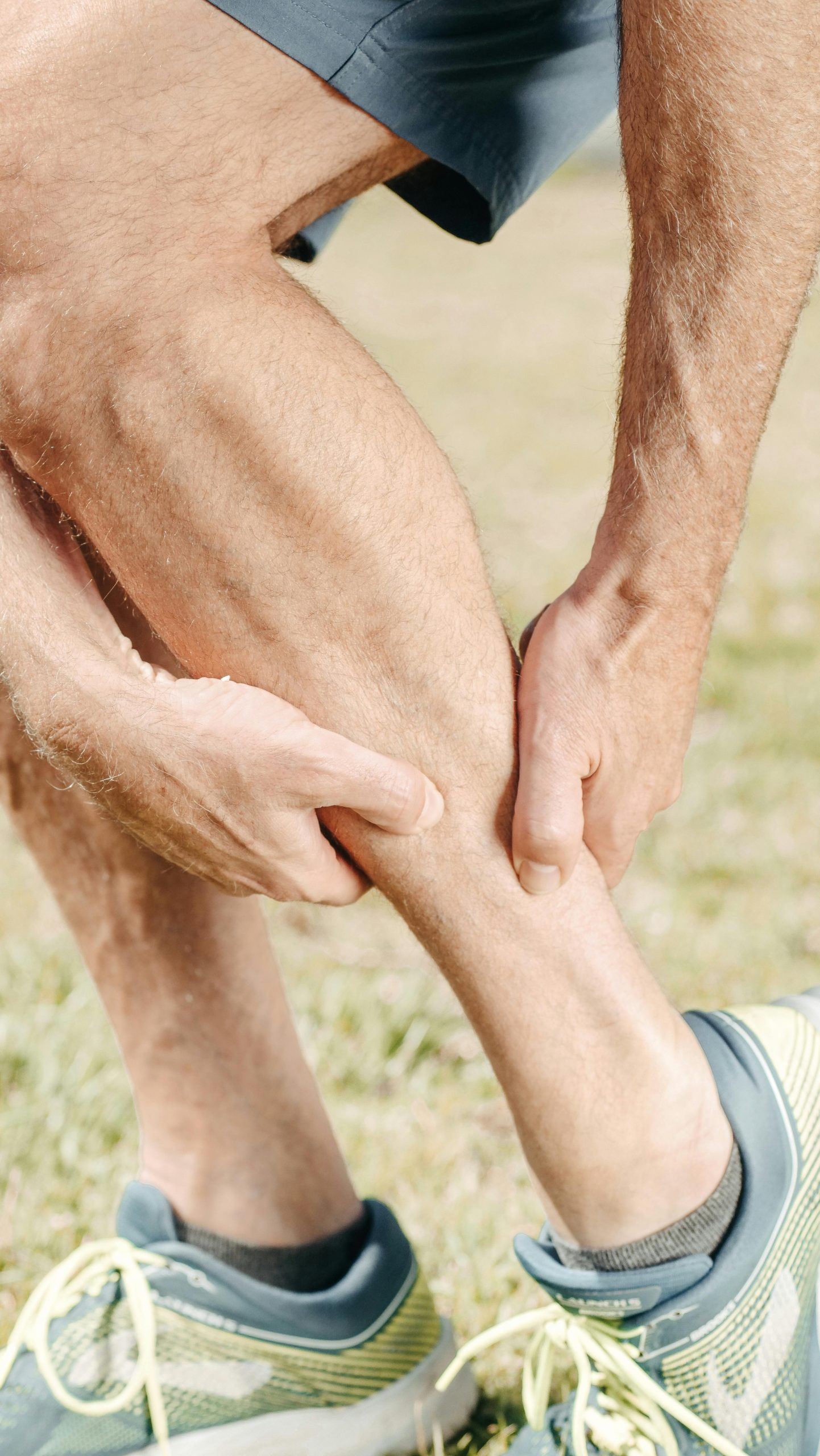
Why Do I Get Muscle Cramps And How Do I Stop Them?
You’re mid-set, feeling strong, and then cramps hit. A sharp, involuntary contraction that locks up a muscle and stops you in your tracks. Few things are as frustrating, or as randomly painful, in training and yet most people have no real idea why it happens or what to do about it.
Here’s what’s actually going on, and more importantly, how to prevent it.
What Is a Muscle Cramp?
A cramp is an involuntary, sustained contraction of a muscle where it fires and then refuses to release. They most commonly affect the calves, hamstrings, quads, and feet, though they can occur anywhere. Ranging from a brief twitch to a prolonged, painful spasm that leaves the muscle sore for hours afterward, most of us have suffered one at some point.
Why Do They Happen?
There’s no single cause, and that’s part of why they’re so misunderstood. The most well-supported explanations are:
Neuromuscular fatigue. This is the leading theory. When a muscle becomes fatigued, the neural signals that regulate contraction and relaxation become disrupted. The muscle essentially gets stuck in the ‘on’ position. This explains why cramps are far more common late in a session, race, or game when accumulated fatigue has built up and dehydration is at it’s peak.
Dehydration and electrolyte depletion. When you sweat, you lose more than water. You lose sodium, potassium, magnesium, and calcium, all of which are essential for proper muscle function. Without adequate levels of these electrolytes, the electrical signals controlling muscle contractions can misfire. This is especially relevant in long sessions, hot conditions, or if you’re a heavy sweater – which is why they’re often more common in summer.
Muscle tightness and poor flexibility. Chronically tight muscles are under more baseline tension and are more vulnerable to cramping under load. If you’re consistently skipping mobility work, you’re operating with less room for error before things go wrong.
Inadequate warm-up. Going hard too quickly without preparing the muscle for load is a reliable way to invite cramps (and more serious injuries), particularly in cold conditions where blood flow to muscle tissue is already restricted.
Cramp is incredibly painful – but you can take steps to reduce your risk profile
Cramps After Training — Including at Night
A lot of people assume cramps only happen during exercise. In reality, some of the most disruptive, persistent and painful cramps occur hours after a session has finished, and the middle of the night is one of the most common times for them to strike.
Why do cramps happen after training?
Once your session ends, your muscles begin the recovery process. Blood lactate clears, tissue repairs, and the nervous system gradually winds down. But if a muscle has been significantly fatigued or left in a shortened position (think tight calves after a long run, or quads/hams after a heavy leg session) it can remain in a state of low-level irritability for hours. Add in dehydration that hasn’t been fully corrected, and the conditions for a post-training cramp are set.
Why at night specifically?
A few things converge to make night-time particularly problematic. First, when you lie down, your feet often naturally point downward, which keeps the calf in a shortened position for hours, which is exactly the position that can trigger a cramp if the muscle is already fatigued or tight. Second, body temperature drops during sleep, reducing blood flow to the extremities. Third, if you haven’t rehydrated and refuelled properly after training, electrolyte levels remain low throughout the night with no opportunity to top them up.
Night cramps tend to be calf or hamstring dominant and can be severe enough to wake you from deep sleep, which is not ideal if you’re training consistently and relying on sleep for recovery.
How to reduce post-training and night cramps:
Prioritise your cool-down and stretching immediately after training, not as an afterthought. Spending 5–10 minutes on the muscles you’ve worked – particularly calves, hamstrings, and hip flexors – significantly reduces the residual tension that contributes to later cramping.
Rehydrate properly before bed. If you trained hard or sweated heavily, water alone may not be enough. An electrolyte drink or even a small snack containing sodium and magnesium in the hours after training can make a real difference.
Avoid going to bed with unaddressed tightness. A few minutes of light stretching before sleep, particularly for the calves and hamstrings, is one of the most effective and underused tools for preventing night cramps.
If night cramps persist despite good hydration and recovery habits, it’s worth reviewing overall training load. Persistent post-training cramping is often a sign that recovery isn’t keeping pace with the volume or intensity of your sessions.
How to Prevent Them
Prevention comes down to addressing the likely causes before they become a problem.
Stay on top of hydration. Drinking water alone isn’t always enough if electrolytes are significantly depleted. For sessions over an hour, or in hot/humid conditions, consider an electrolyte drink or supplement. Don’t wait until you’re thirsty; by that point you’re already behind.
Eat for performance. Magnesium deficiency in particular is associated with increased cramping. Foods like leafy greens, nuts, seeds, and wholegrains are good sources. If your diet is poor and you’re training hard, your muscles will let you know.
Train within your current fitness level. Cramping that consistently happens at a certain intensity or duration is a signal that you’ve pushed past your conditioning. Progressive overload isn’t just for building muscle; it also builds the neuromuscular resilience that keeps cramps at bay.
Warm up properly. A thorough warm-up increases blood flow, raises muscle temperature, and primes the nervous system.
Stretch and mobilise regularly. Particularly if you have chronically tight calves, hamstrings, or hip flexors. This doesn’t need to be extensive. Consistent, targeted work a few times per week makes a real difference over time.
Don’t neglect rest and recovery. Cramping can be a sign of accumulated fatigue over days or weeks, not just within a single session. If you’re sleeping poorly, under-eating, or overtraining, your neuromuscular system is already compromised before you start training.
What to Do When One Hits
Stretch the affected muscle immediately. This activates the Golgi tendon organ, which signals the muscle to relax. For a calf cramp, flex the foot upward and hold it. Massage the area once the acute contraction eases. Rehydrate, especially if you’ve been sweating heavily.
If cramps are happening regularly, that’s worth paying attention to. It’s rarely a coincidence. Something in your training, nutrition, or recovery is consistently off.
If you are interested in starting personal training or simply want some guidance on how to approach your training more effectively, you can find more information here
Or get in touch and we can arrange a time to talk through your goals and see whether coaching would be useful for you.





Frequently Asked Questions About Muscle Cramps
Is it normal to cramp during a hard session?
Yes, particularly if you’re pushing close to your limits or the session is longer than you’re conditioned for. Occasional cramping during intense training isn’t unusual. Frequent cramping, however, is a signal that something in your training, nutrition, or recovery needs addressing.
Should I train through a cramp?
No. Stop, stretch the muscle, and allow it to release fully before continuing. Pushing through a cramp risks making it worse and can leave the muscle sore and irritable for the rest of the session.
Does drinking water immediately fix a cramp?
Not instantly. Hydration helps prevent cramps rather than stop one mid-contraction. If you’re cramping because of electrolyte depletion, plain water won’t replace the sodium, potassium, or magnesium you’ve lost. You need to address that through food or an electrolyte supplement after the session.
Why do I cramp even when I’ve been drinking plenty of water?
Because hydration is only part of the picture. If you’re sweating heavily and replacing fluid without replacing electrolytes, you can actually dilute sodium levels further. You may also be dealing with neuromuscular fatigue, insufficient warm-up, or accumulated training load, none of which water alone will fix.
Are night cramps dangerous?
In otherwise healthy, active people, night cramps are almost always benign – painful and disruptive, but not harmful. If they’re severe, very frequent, or accompanied by other symptoms such as swelling, persistent weakness, or numbness, it’s worth speaking to a GP to rule out an underlying cause.
Can supplements help?
Magnesium is the most commonly recommended supplement for cramping, and there is reasonable evidence supporting its role in muscle function. If your diet is lacking in magnesium-rich foods, supplementation may help. Electrolyte tablets or drinks are also worth considering for longer or harder sessions. That said, supplements won’t compensate for poor training habits, inadequate sleep, or chronic dehydration.
How long should a cramp last?
Most cramps resolve within a few seconds to a couple of minutes with stretching. If a cramp persists beyond that, or the muscle remains in spasm, continue stretching and apply gentle massage. Post-cramp soreness can linger for 24–48 hours, particularly after a severe one.
Book a free Personal Training session today
If you’re in Colwick, Netherfield, West Bridgford, or anywhere else in Nottingham and you’re considering personal training, now’s your chance!
Book your FREE personal training session today and turn your fitness dreams and transformation goals into an achievable reality.
Don’t just take our word for it; feel the difference in guidance, expertise, and motivation. Nottingham residents, your journey to the best version of yourself starts with just one session.
Sign up to the RWF newsletter

